TIFF to WebP converter
Convert TIFF files to lightweight WebP. Massive size reduction with quality preserved. Runs entirely in your browser. No server uploads, no registration required.
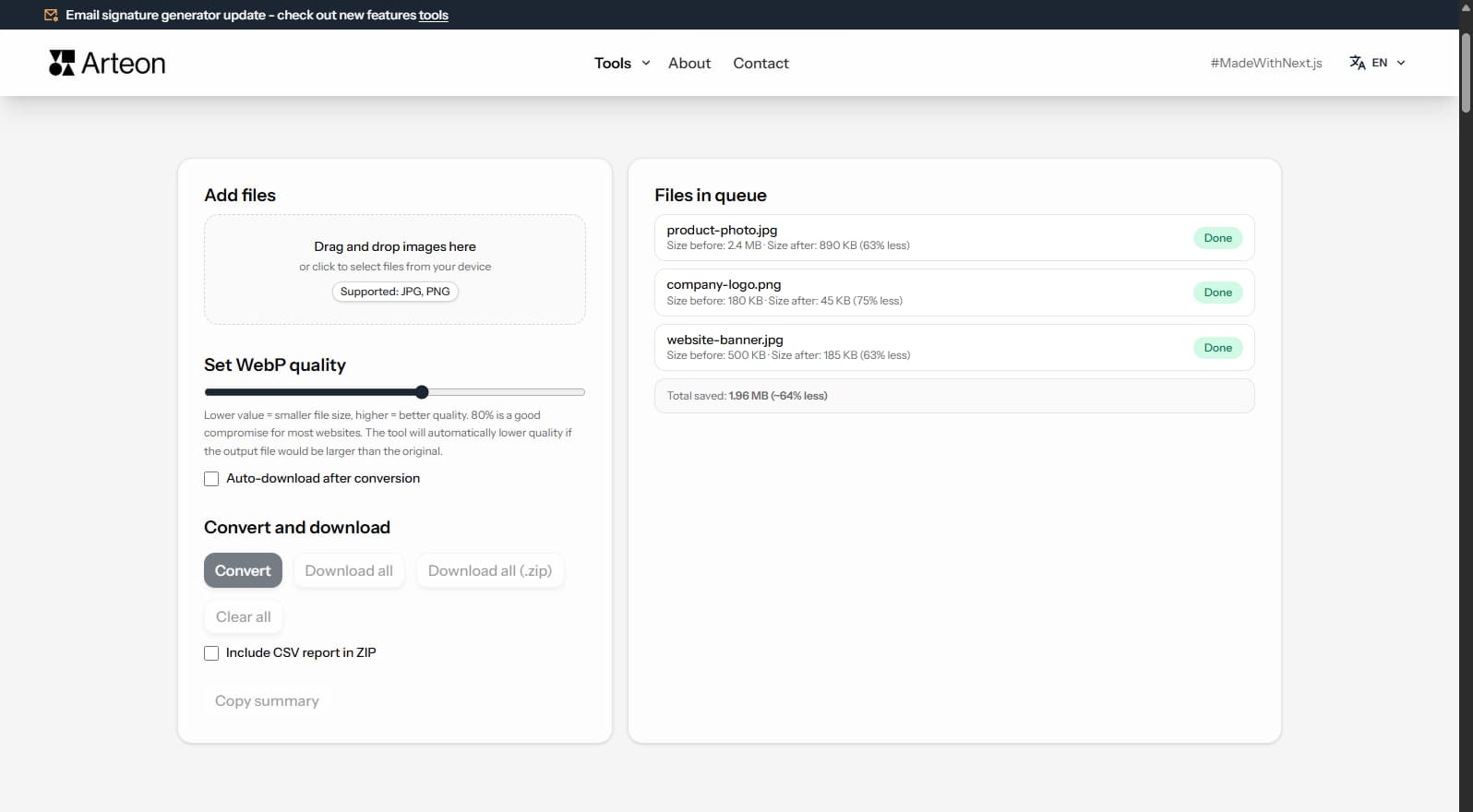
Files in queue
Why convert TIFF to WebP?
TIFF files are used in professional print and archival workflows but are impractical for the web — they are extremely large and not supported by any browser natively. WebP offers excellent compression (25–35% smaller than JPG, 50–70% smaller than PNG at equivalent quality) and is supported by all modern browsers.
Converting TIFF to WebP is essential when preparing professional images for web publishing, e-commerce product listings, or portfolios. WebP supports both lossy and lossless compression, alpha transparency, and millions of colors.
WebP uses lossy compression by default, so some pixel-level detail may differ from the original TIFF. For archival purposes, keep the original TIFF. For web display, WebP provides the optimal balance between quality and file size.
All processing happens locally in your browser — nothing is sent to any server. No registration, no limits, no watermarks.
How to convert TIFF to WebP
Upload your TIFF file
Drag and drop your TIFF image onto the converter area or click to browse your device. You can add multiple files at once for batch conversion.Adjust settings
Choose your preferred quality and output options. The converter shows a live preview so you can compare the original TIFF with the WebP result before downloading.Download your WebP file
Click the download button to save your converted WebP file. For multiple files, use the batch download option to get all results in one click.
When should you convert TIFF to WebP?
Website optimization
TIFF files cannot be displayed in web browsers and are extremely large. Converting to WebP creates web-optimized images that are 50–70% smaller than equivalent JPG or PNG files.Email and sharing
TIFF files are too large for email attachments (often 20–50 MB). WebP produces compact files that are easy to share via email and messaging while maintaining good visual quality.E-commerce and marketplaces
Professional product photos shot in TIFF need to be converted for web use. WebP offers excellent compression for product listings on Shopify, WooCommerce, Amazon, and other platforms.Documents and archival
WebP provides efficient storage for web-ready image archives. Converting TIFF collections to WebP can reduce storage by 90% or more while maintaining quality suitable for screen display.
What makes this TIFF to WebP converter different?
Complete privacy
Your TIFF files are processed entirely in your browser. Nothing is uploaded to any server – your images stay on your device at all times.No limits
Convert as many TIFF files to WebP as you need. There are no daily limits, no file size restrictions, and no watermarks on the output.Quality control
Adjust compression settings to find the perfect balance between file size and image quality. Preview changes in real time before downloading.Instant conversion
All processing happens locally using modern browser APIs, which means conversion is fast and works even without an internet connection after the page loads.
TIFF to WebP conversion in practice
Businesses, developers, and creators worldwide rely on image format compatibility. Whether you are preparing product images for Amazon, eBay, Etsy, Shopify, optimizing graphics for WordPress, Wix, Squarespace, or converting photos for government portals worldwide, having the right format matters.
Modern web standards increasingly favor efficient formats. Google PageSpeed Insights and Core Web Vitals metrics reward pages that use optimized images. Converting TIFF to WebP can directly improve your Largest Contentful Paint (LCP) score, which impacts both search rankings and user experience.
For email marketing campaigns and social media, WebP provides excellent compression while maintaining visual quality. Whether you are a freelancer, small business owner, or enterprise user, this converter handles your image conversion needs reliably and securely.
Tips for converting TIFF to WebP
- Start with quality 85 – this is typically the sweet spot for WebP compression, offering significant file size reduction with minimal visible quality loss.
- Batch convert for efficiency – if you have many TIFF files, use the batch conversion feature to process them all at once. This saves considerable time compared to one-by-one conversion.
- Compare before downloading – use the live preview to compare the original TIFF with the WebP result. Adjust quality settings until you find the right balance for your specific use case.
- Keep your originals – always save a copy of your original TIFF files. Lossy compression is irreversible, so having the originals allows you to re-convert with different settings later.
TIFF vs WebP – format comparison
| Feature | TIFF | WebP |
|---|---|---|
| Lossy compression | — | ✓ |
| Lossless compression | ✓ | ✓ |
| Transparency (alpha channel) | ✓ | ✓ |
| Animation support | — | ✓ |
| Web browser support | Safari only | Chrome 32+, Firefox 65+, Edge 18+, Safari 14+ |
| Color depth | 8/16/32-bit | 8-bit (16.7M) |
| Compact file size | — | ✓ |
| Metadata (EXIF) | ✓ | ✓ |
Quality settings – what to choose when converting TIFF to WebP?
The quality slider lets you set a value from 60% to 95%. Higher values mean better image quality but larger file sizes.
- 80% (default) – a good balance for most use cases: web publishing, blogs, portfolios. The visual difference compared to the original is virtually unnoticeable.
- 85–90% – for product photography and galleries where quality is the priority.
- 60–70% – when minimizing file size is the priority, e.g. thumbnails or category grids.
TIFF files are typically very large (20–50 MB). At 80% quality, WebP reduces them to 300–800 KB — a 95%+ reduction that makes web publishing practical.
How much can you save by converting TIFF to WebP?
TIFF files are extremely large. WebP provides dramatic file size reductions:
Camera photo (TIFF)
25 MB → 650 KB
Scanned document
15 MB → 280 KB
Product photo
8 MB → 350 KB
Actual savings vary depending on image content and quality settings. The converter shows the exact size before and after conversion for each file.
Convert other files to WebP
Convert TIFF to other formats
Frequently asked questions about TIFF to WebP conversion
Is converting TIFF to WebP free?
Yes, this TIFF to WebP converter is completely free with no limits. You can convert as many files as you need without registration or watermarks.
Does the converter upload my files to a server?
No. All processing happens locally in your browser using JavaScript and Canvas API. Your files never leave your device, ensuring complete privacy and security.
Will I lose quality when converting TIFF to WebP?
WebP supports lossless compression, so you can preserve the original image quality completely. If WebP also supports lossy mode, you can choose lower quality for smaller files.
Can I convert multiple TIFF files at once?
Yes, the converter supports batch conversion. You can add multiple TIFF files and convert them all to WebP simultaneously. Use the batch download option to save all converted files at once.
Do all browsers support WebP?
WebP is supported by Chrome, Firefox, Safari 14+, Edge. For older browsers that don't support WebP, you can use the HTML <picture> element to provide a fallback format like JPG or PNG.
What is the maximum file size I can convert?
There is no hard file size limit since processing happens in your browser. However, very large files (over 50 MB) may take longer to process depending on your device's available memory and processing power.
Does the converter work on mobile devices?
Yes, the converter works on any device with a modern web browser, including smartphones and tablets. The interface adapts to your screen size for a comfortable experience on any device.
Help us improve our tools
Have an idea, found a bug, or want to suggest a feature? Drop us a message - we respond within 24 hours.
Explore other useful tools
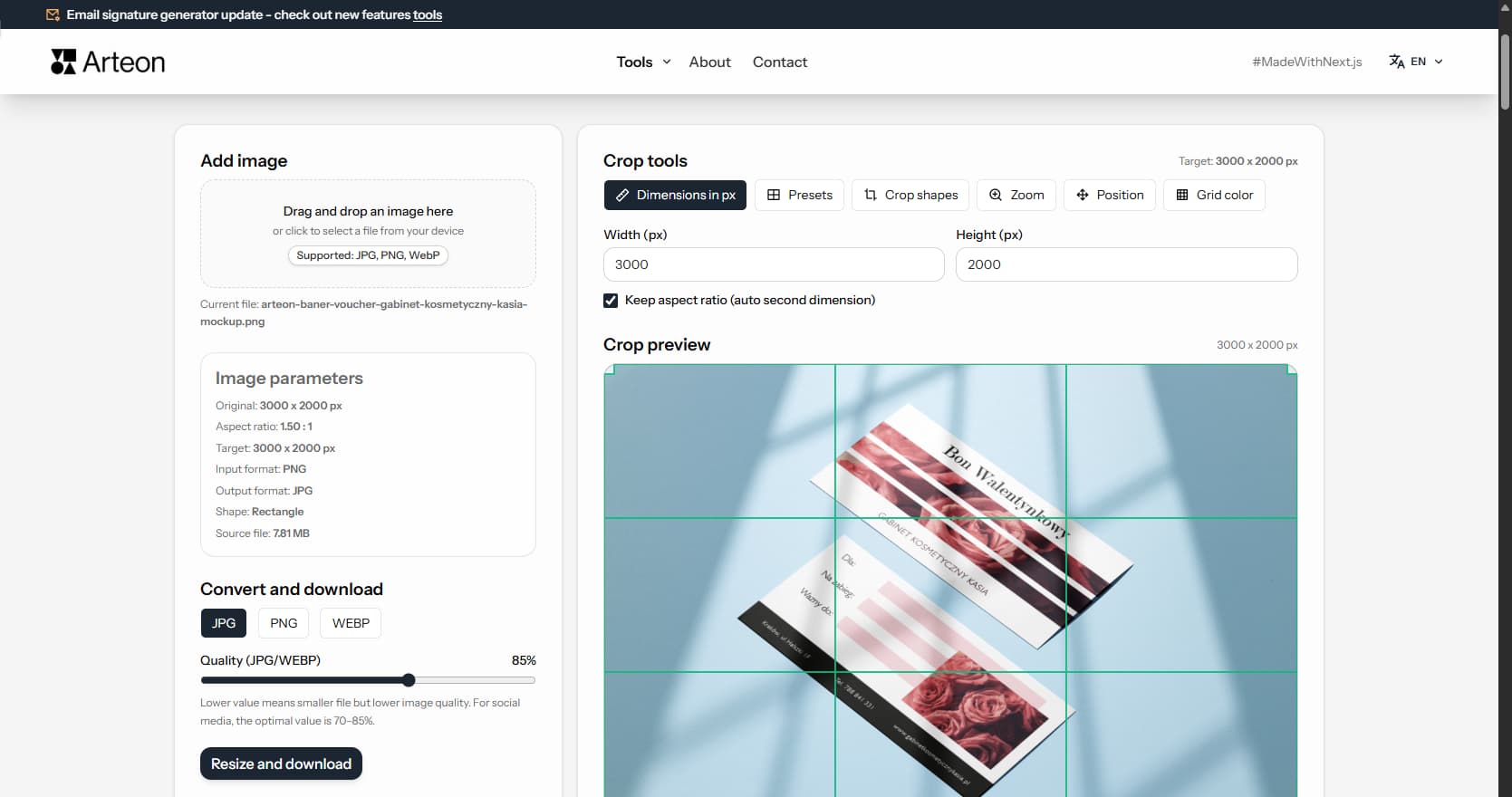
Online image editor
Resize, crop and convert your image. Ready-made formats for social media, circular avatars, export to JPG/PNG/WebP.
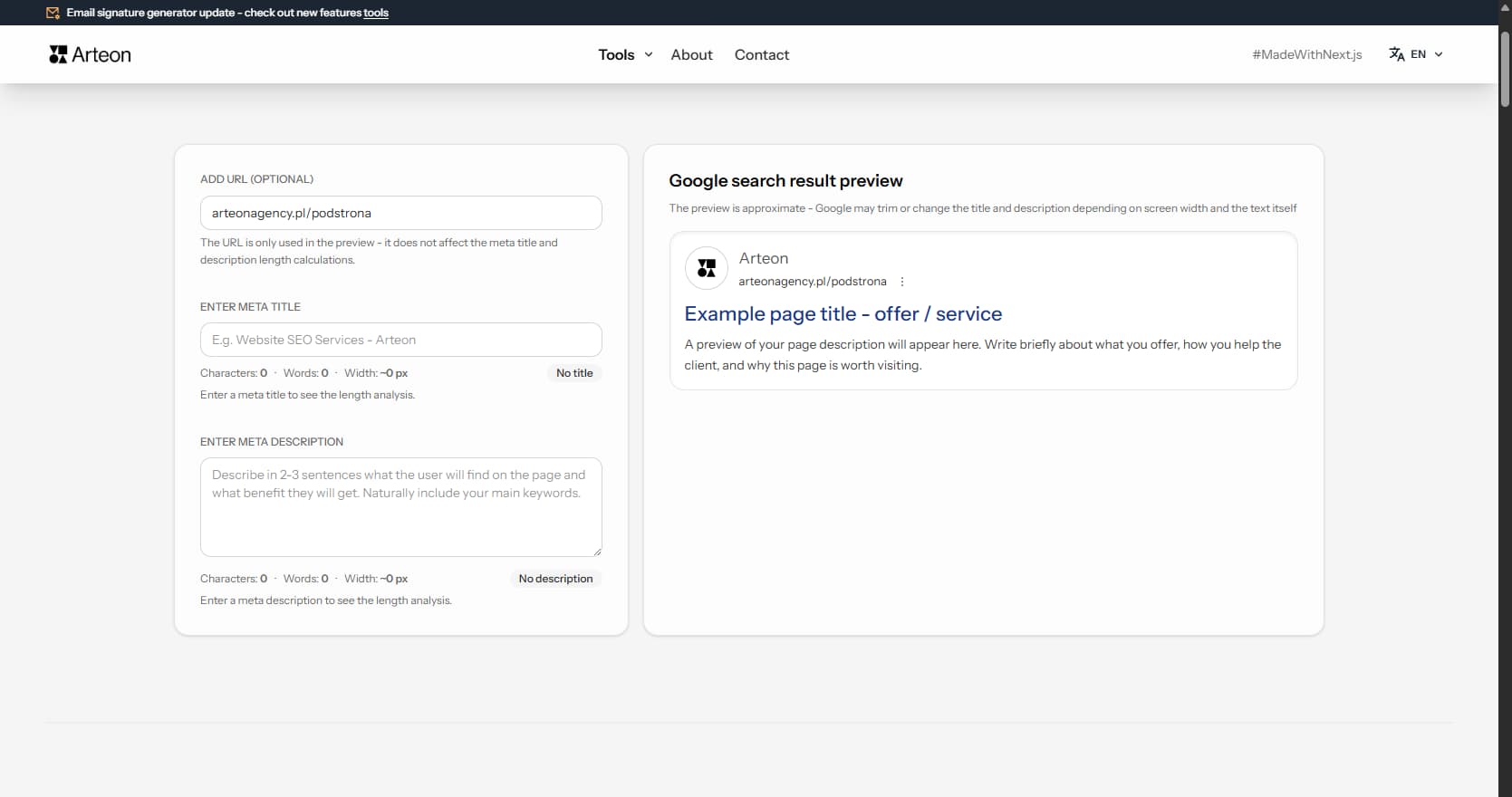
Meta title & description checker
Check title and description length in pixels. Live Google preview and optimization tips.
PNG to JPG
Convert PNG files to JPG in your browser. No file limits, no signup, no server uploads.
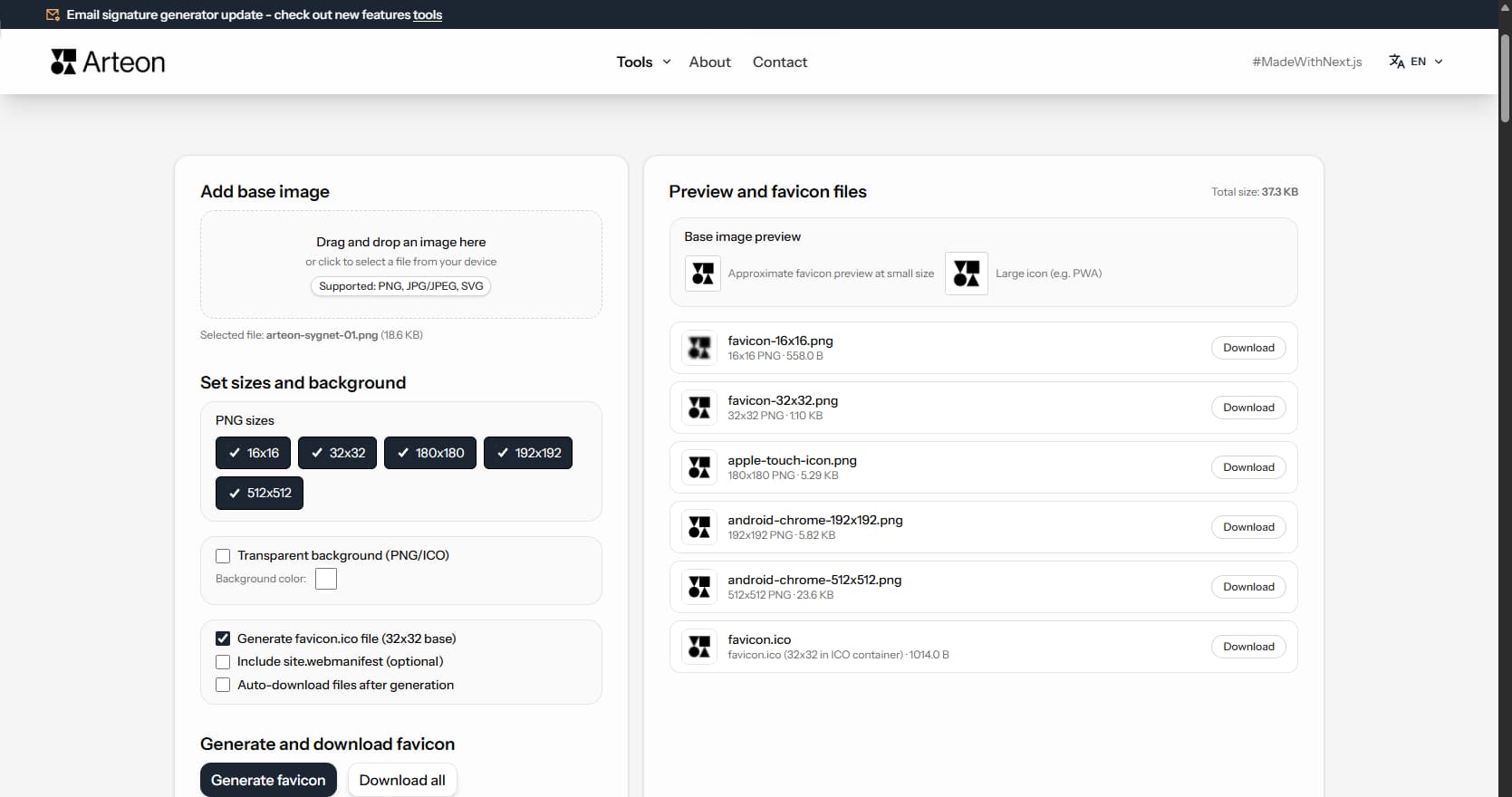
Favicon generator
Create a complete favicon.ico set for your website from one image. All required sizes, no login.
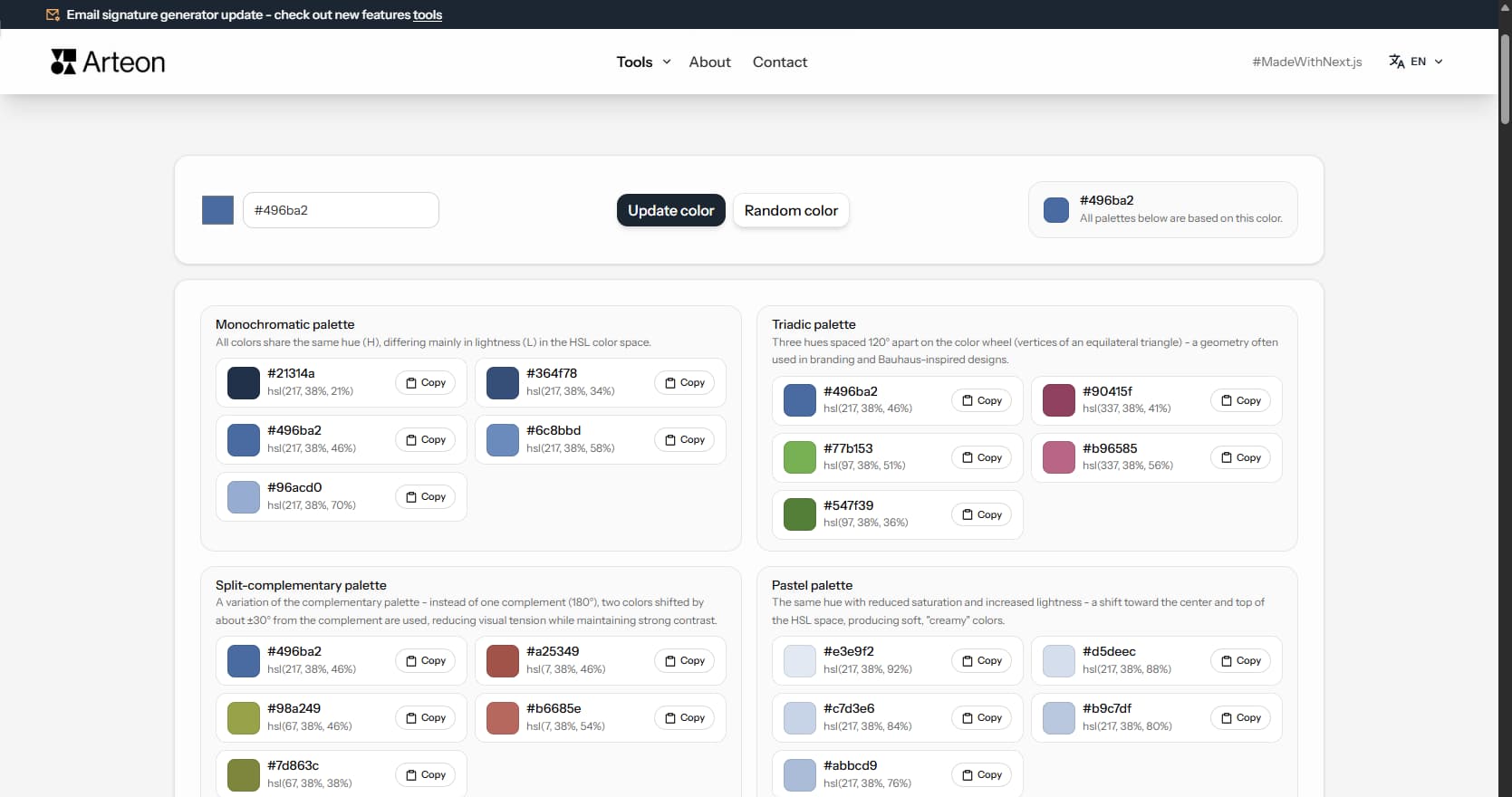
Color palette generator
Generate 9 palettes from one color: monochromatic, complementary, triadic and more. HEX codes.
WebP to JPG
Convert WebP files to universally compatible JPG. Works in every app and platform.
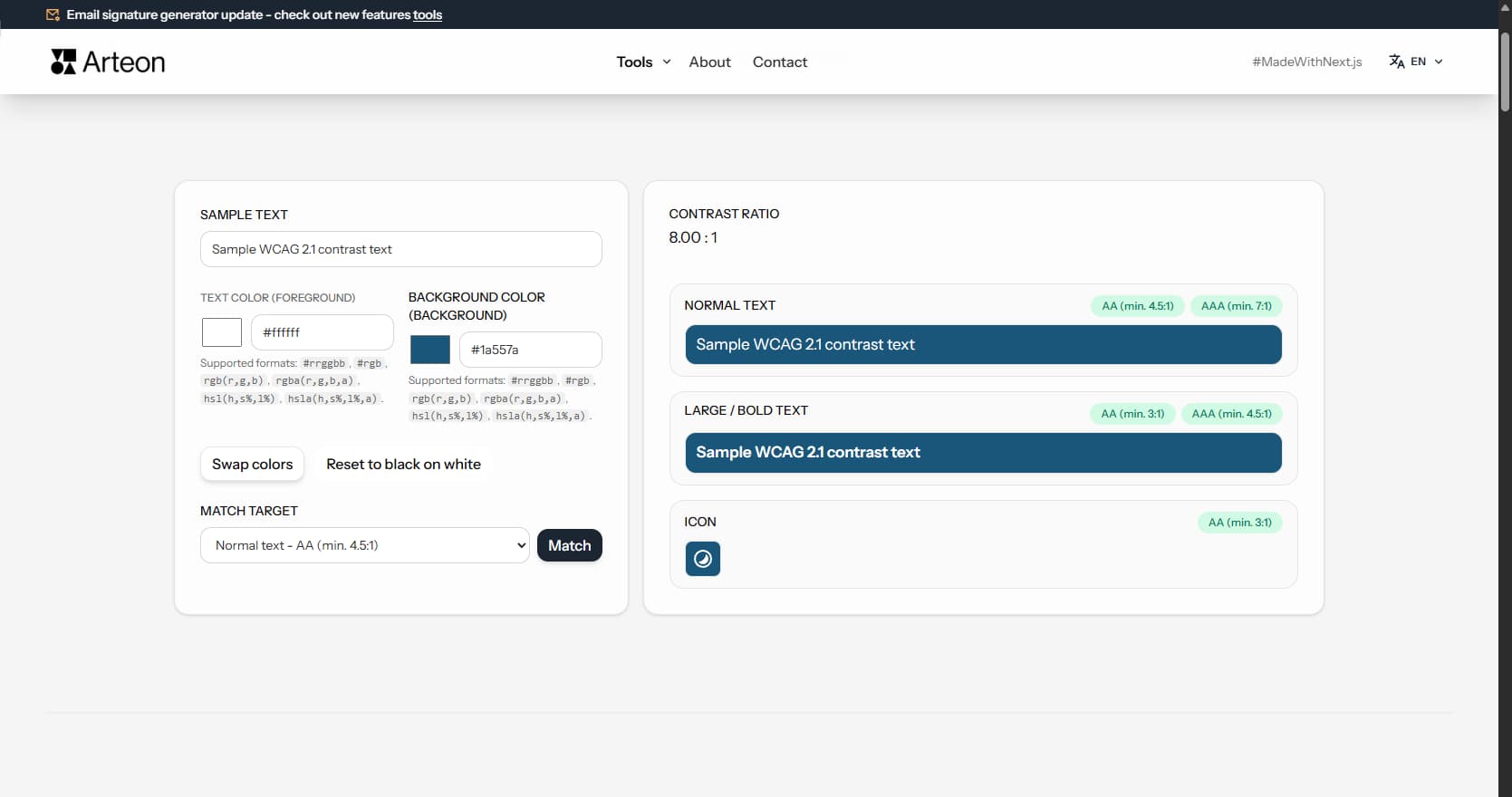
Color contrast checker
Check text and background contrast per WCAG 2.1 AA and AAA. Automatic color correction.
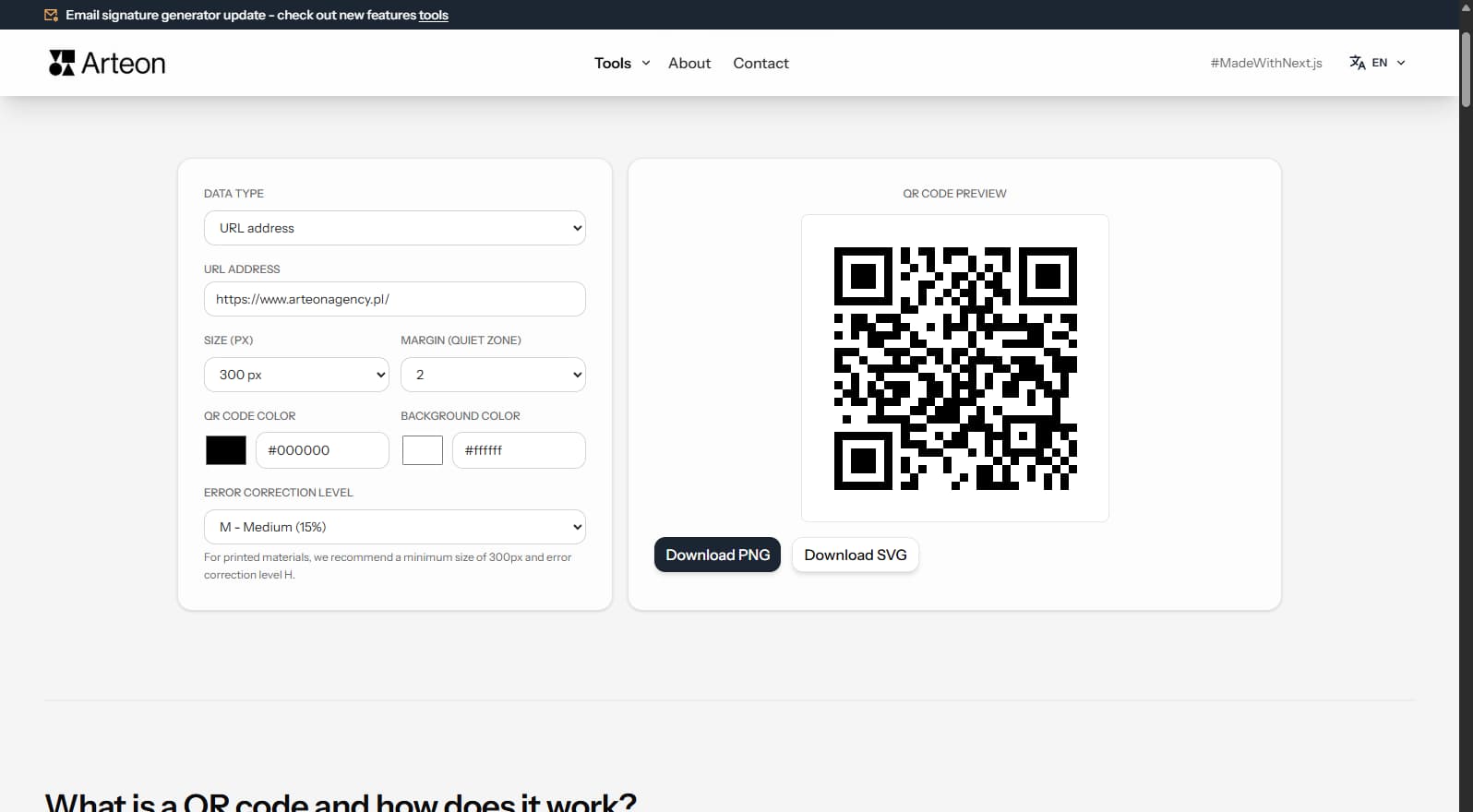
Free QR code generator
Create a QR code for a website, vCard business card or print. Export PNG and SVG, no registration.
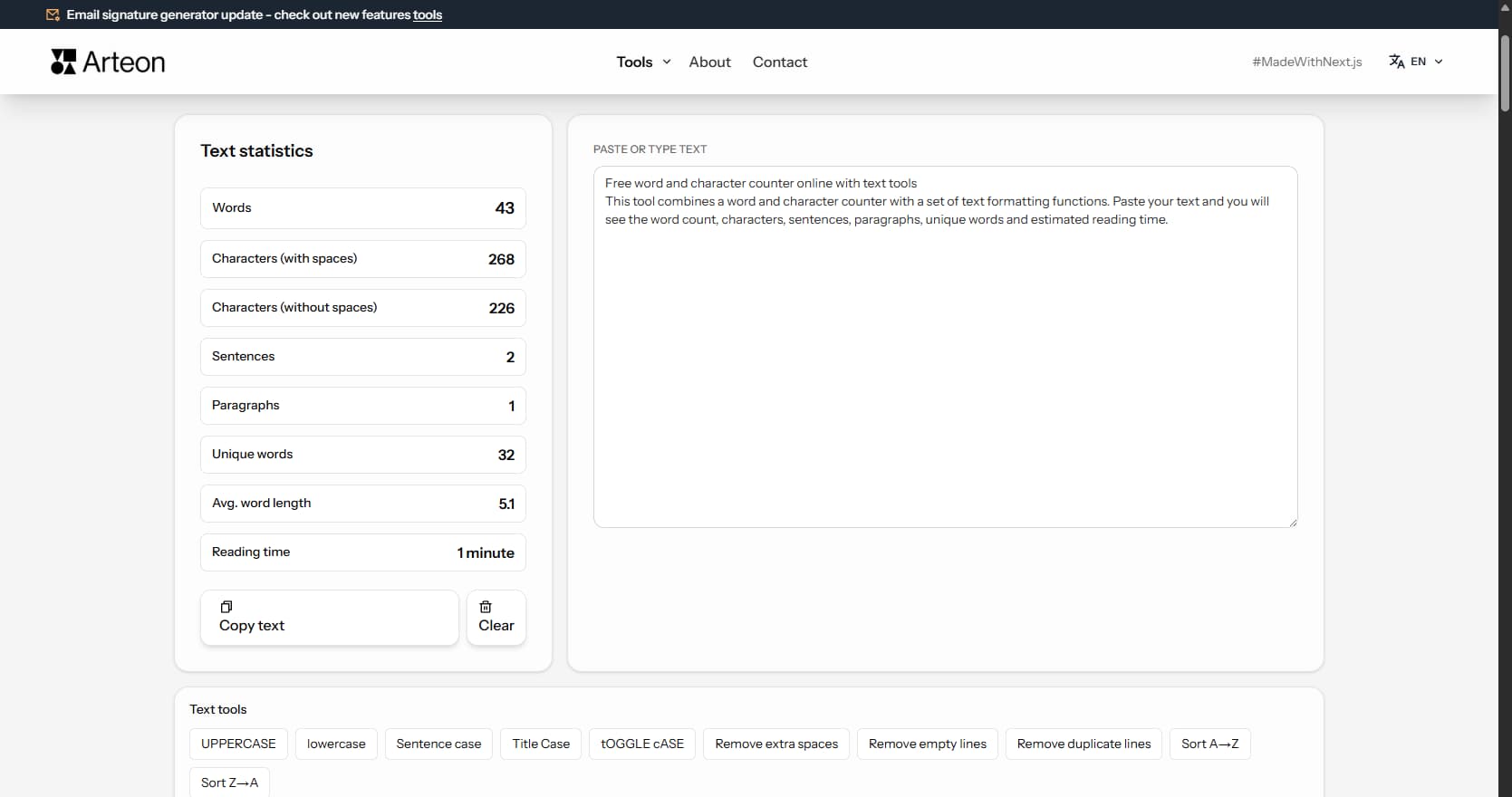
Word & character counter
Count words, characters, sentences and reading time. Check readability with the Flesch-Kincaid score.