Base64 to image converter
Decode Base64 strings to images. Preview and download in your browser. Free, no registration.
Image preview
Why convert Base64 to image?
Base64 encodes binary image data as a text string. You encounter Base64-encoded images in CSS source code (background-image: url(data:...)), HTML <img> tags, API responses (OpenAI Vision, Google Cloud Vision), JSON/XML files, email templates, and Outlook signatures. This converter decodes them back to viewable images.
Decoding Base64 is essential for debugging frontend code, analyzing email templates, working with APIs that return images as Base64, and recovering images from configuration files or databases.
The converter auto-detects the MIME type from the data URI prefix (e.g., data:image/png;base64,) and displays a preview. It supports JPG, PNG, WebP, GIF, SVG, and BMP formats. Raw Base64 strings without prefixes are also handled — the converter attempts to detect the format automatically.
All processing happens locally in your browser — nothing is sent to any server. No registration, no limits, no tracking.
How to convert Base64 to image
Paste Base64 string
Paste the Base64 encoded string into the input field.Convert
Click Convert - files are processed locally in your browser.Download your image
Download the decoded image file with a single click. The converter auto-detects the format from the Base64 data URI prefix.
What makes this converter different?
Complete privacy
Your files are processed entirely in your browser. Nothing is uploaded to any server.No limits
Convert as many files as you need. No daily limits, no file size restrictions, no watermarks.Quality control
Adjust settings to find the perfect balance between file size and quality.Instant conversion
All processing happens locally using modern browser APIs - fast and works offline after loading.
How does Base64 to image decoding work?
Base64 decoding is the reverse of Base64 encoding — it converts a text string back into binary image data. The converter reads the Base64 string (with or without the data URI prefix), decodes it into raw bytes, and reconstructs the original image file.
The data URI prefix (e.g., data:image/png;base64,) tells the converter which image format to use. If the prefix is missing, the converter detects the format automatically from the binary signature (magic bytes) of the decoded data.
This tool is useful when you need to extract an image from an HTML page, CSS file, API response, or database that stores images as Base64 strings. The decoded image can be saved as PNG, JPG, or any other standard format. The conversion runs entirely in your browser — no data is sent to any server.
Tips for converting BASE64 to IMAGE
A few tips to help you avoid common issues during conversion:
Data URI prefix
The converter accepts Base64 strings both with and without the data URI prefix (data:image/...). If the prefix is present, it is used to determine the output format.Invalid characters
Base64 strings should only contain A–Z, a–z, 0–9, +, /, and = (padding). Whitespace and line breaks are automatically stripped before decoding.Output format
The decoded image is saved in the format specified by the data URI prefix. If no prefix is provided, the converter detects the format from the image data automatically.Large strings
Very long Base64 strings (representing large images) may take a moment to decode. The converter handles strings of any length that your browser can process.
Convert other files to JPG
Frequently asked questions about Base64 to image conversion
Is converting Base64 to image free?
Yes, this converter is completely free with no limits. No registration, no watermarks.
Does the converter upload my files?
No. All processing happens locally in your browser. Your files never leave your device.
Can I convert multiple files at once?
Yes, the converter supports batch conversion. Add multiple files and convert them all simultaneously.
Does the converter work on mobile?
Yes, the converter works on any device with a modern web browser, including smartphones and tablets.
Is converting Base64 to image safe?
Yes. The entire decoding process runs locally in your browser. Your data is never sent to any server. When you close the page, all data is automatically cleared from memory.
What image formats are supported?
The converter can decode Base64 strings into PNG, JPG, GIF, WebP, SVG, BMP, and other standard image formats. The format is detected automatically from the data URI prefix or the binary content.
Where can I find Base64 image strings?
Base64 image strings are commonly found in HTML img src attributes, CSS background-image properties, API responses, email templates, and database records. They start with data:image/ followed by the format and base64 encoding.
Help us improve our tools
Have an idea, found a bug, or want to suggest a feature? Drop us a message – we respond within 24 hours.
Explore other useful tools
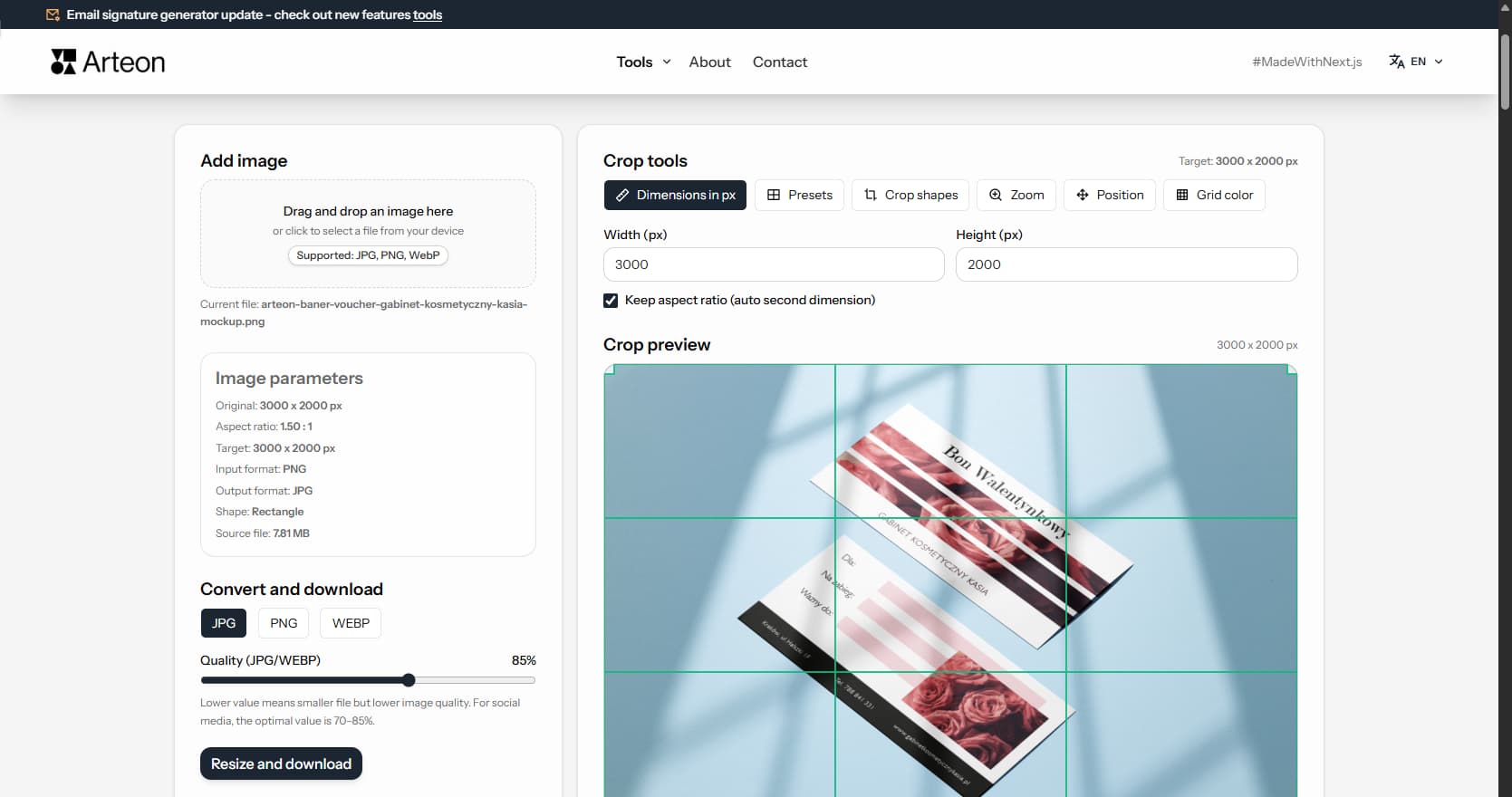
Online image editor
Resize, crop and convert your image. Ready-made formats for social media, circular avatars, export to JPG/PNG/WebP.
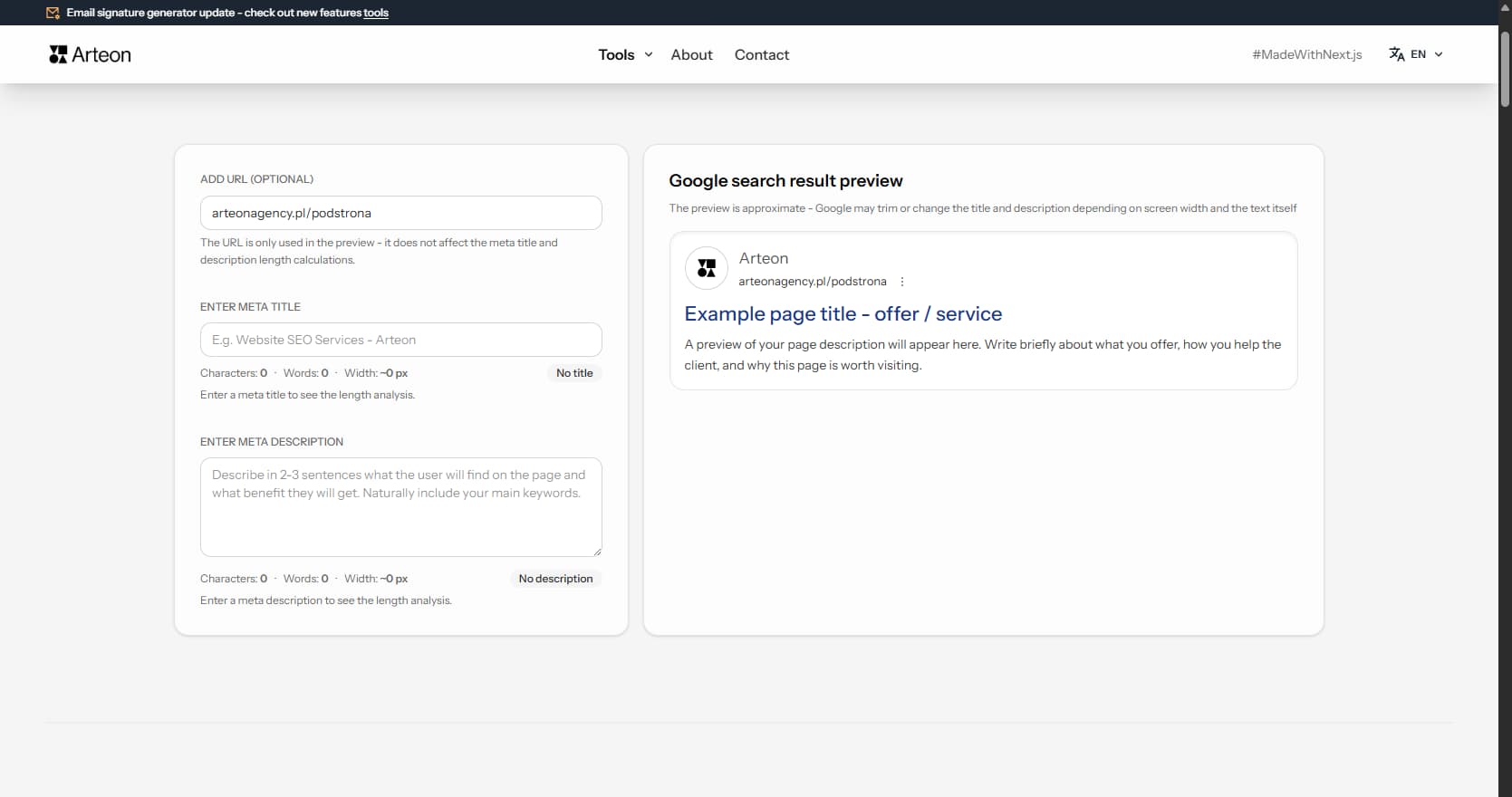
Meta title & description checker
Check title and description length in pixels. Live Google preview and optimization tips.
PNG to JPG
Convert PNG files to JPG in your browser. No file limits, no signup, no server uploads.
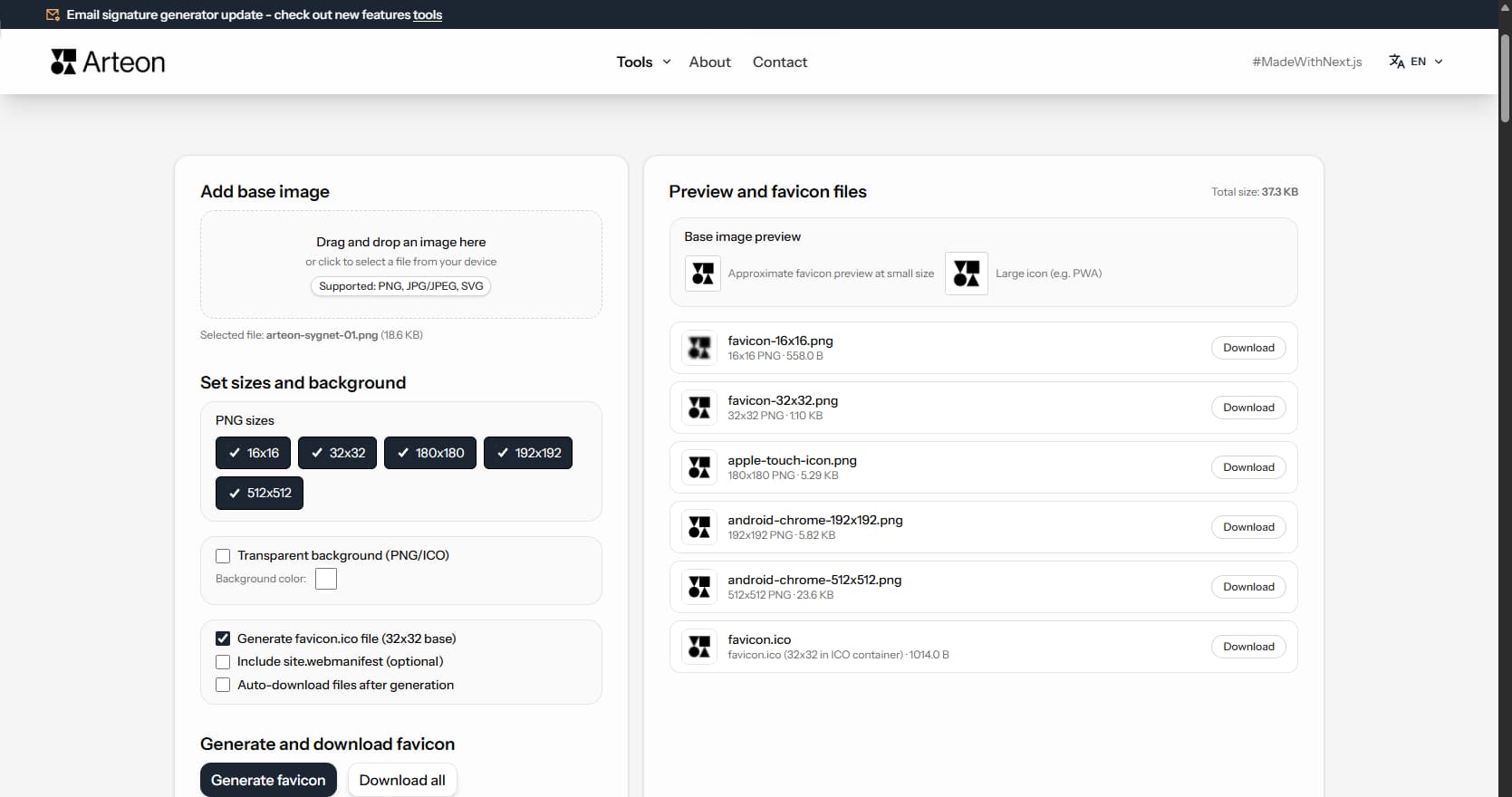
Favicon generator
Create a complete favicon.ico set for your website from one image. All required sizes, no login.
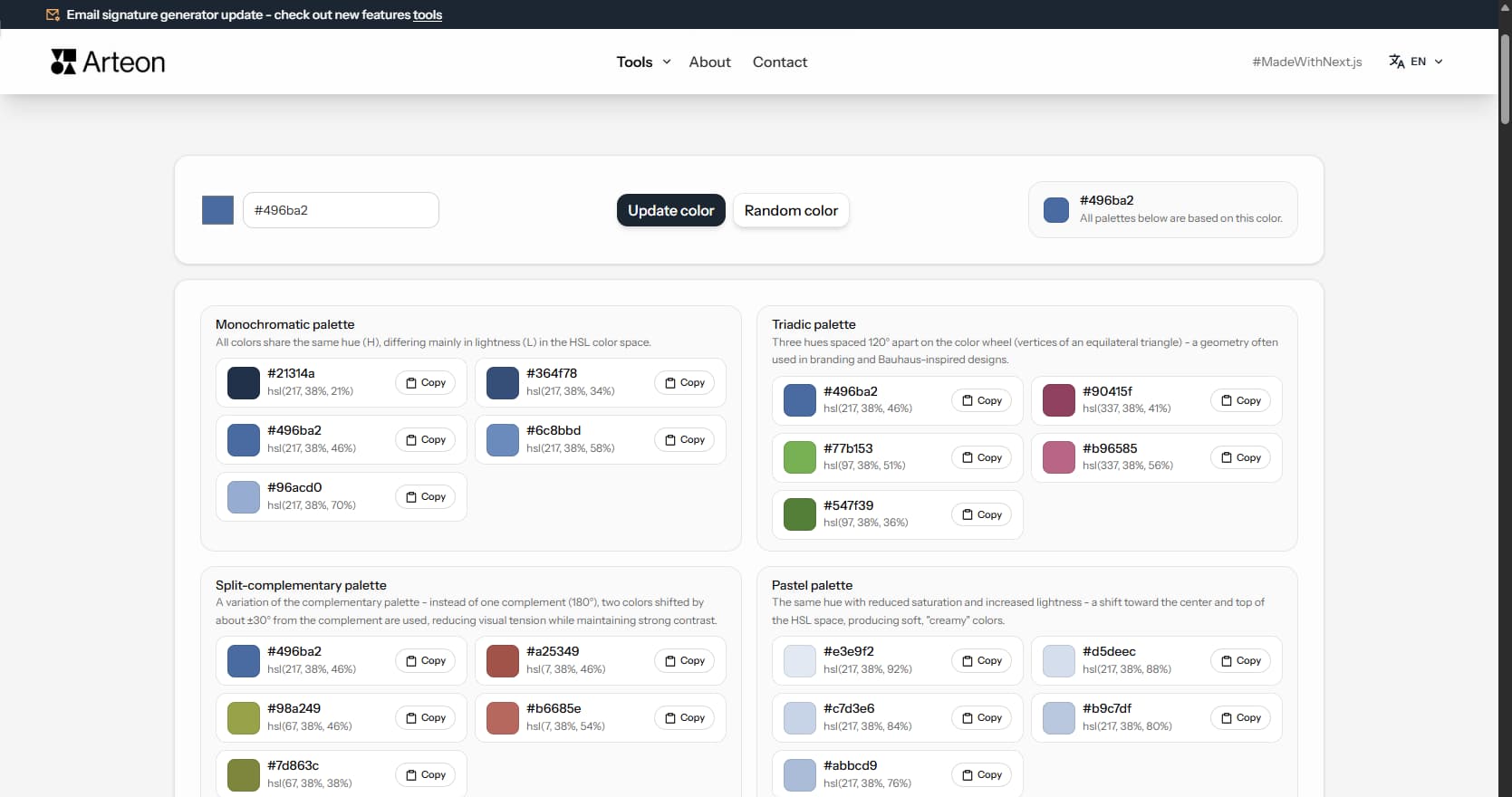
Color palette generator
Generate 9 palettes from one color: monochromatic, complementary, triadic and more. HEX codes.
WebP to JPG
Convert WebP files to universally compatible JPG. Works in every app and platform.
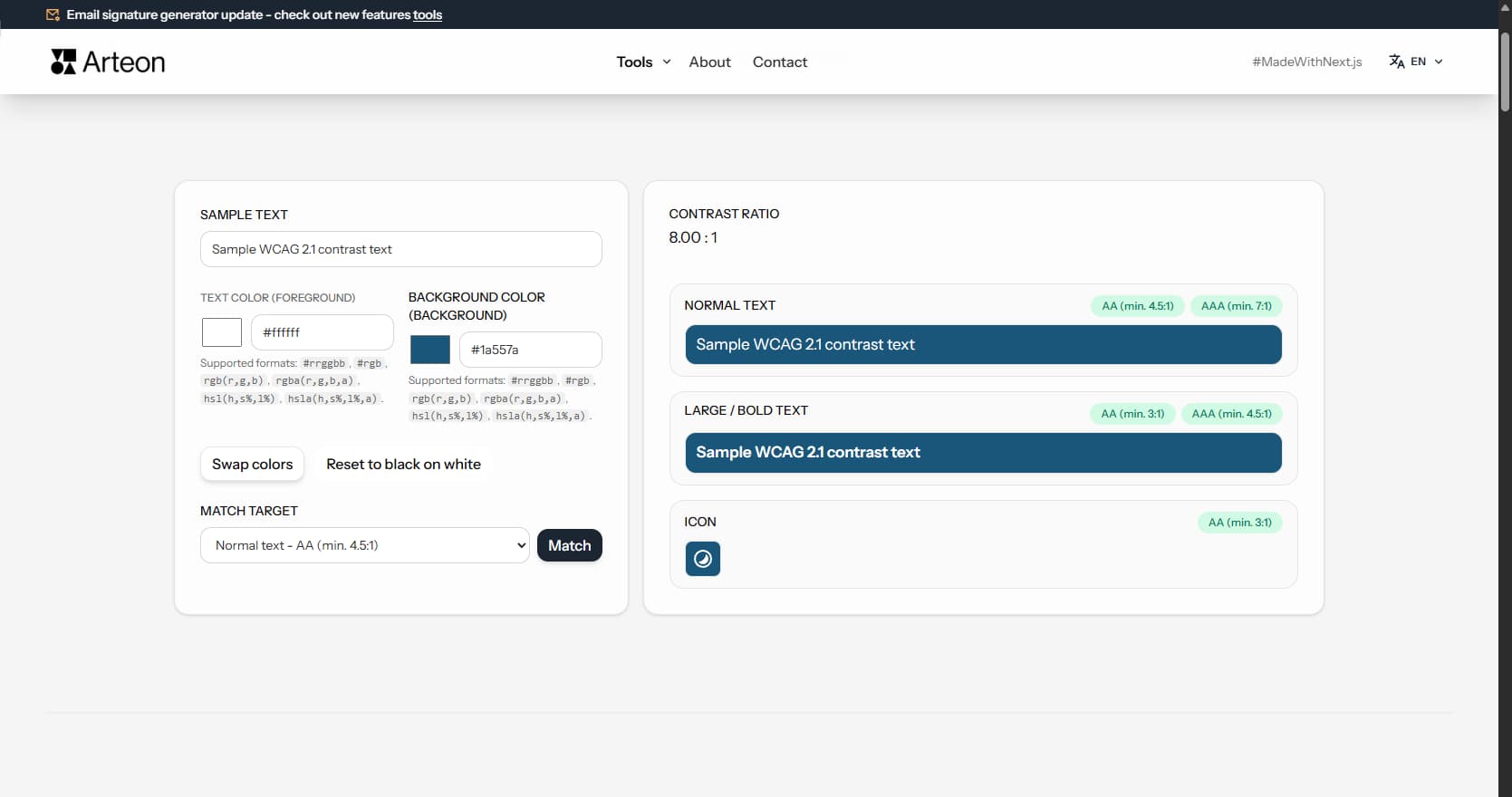
Color contrast checker
Check text and background contrast per WCAG 2.1 AA and AAA. Automatic color correction.
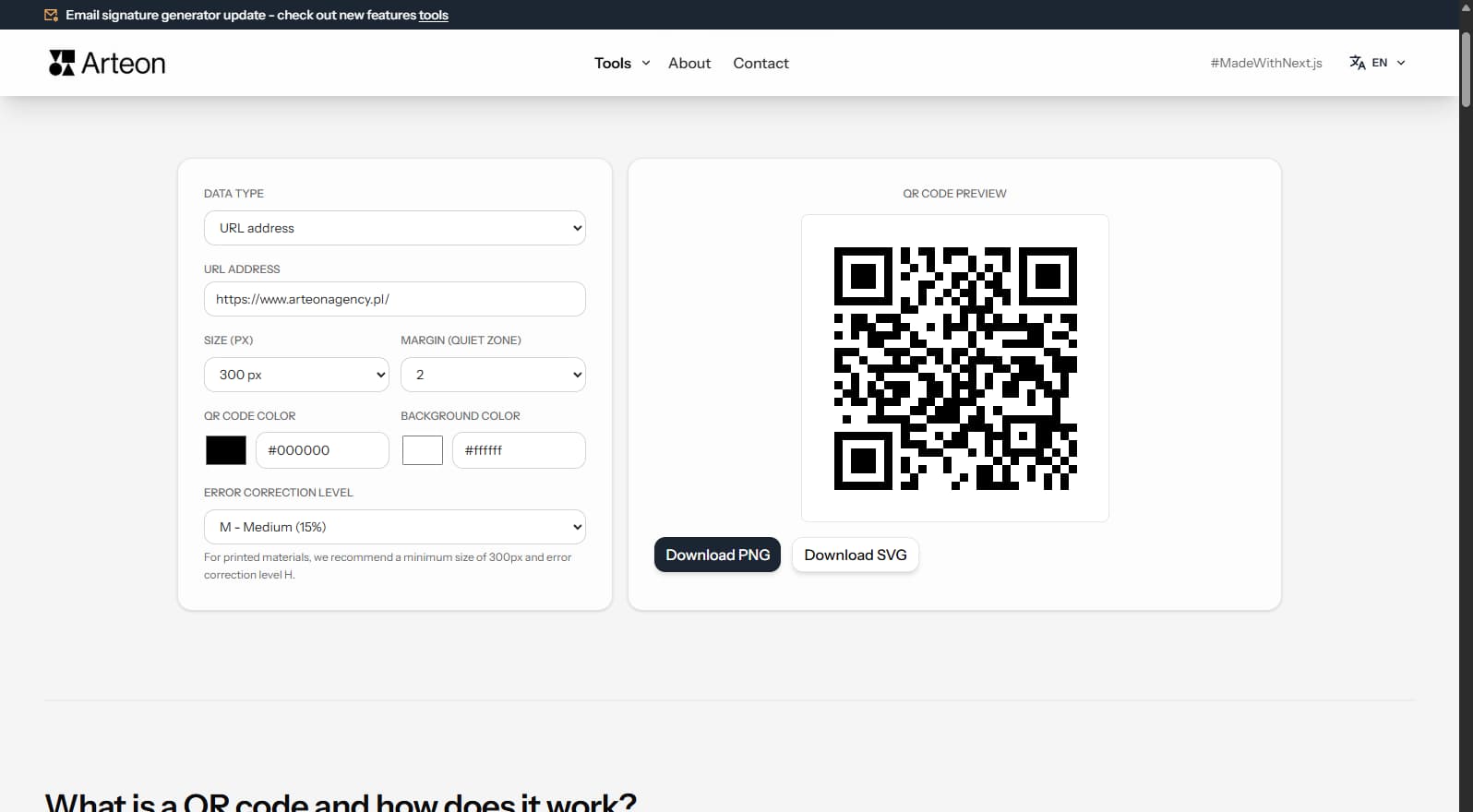
Free QR code generator
Create a QR code for a website, vCard business card or print. Export PNG and SVG, no registration.
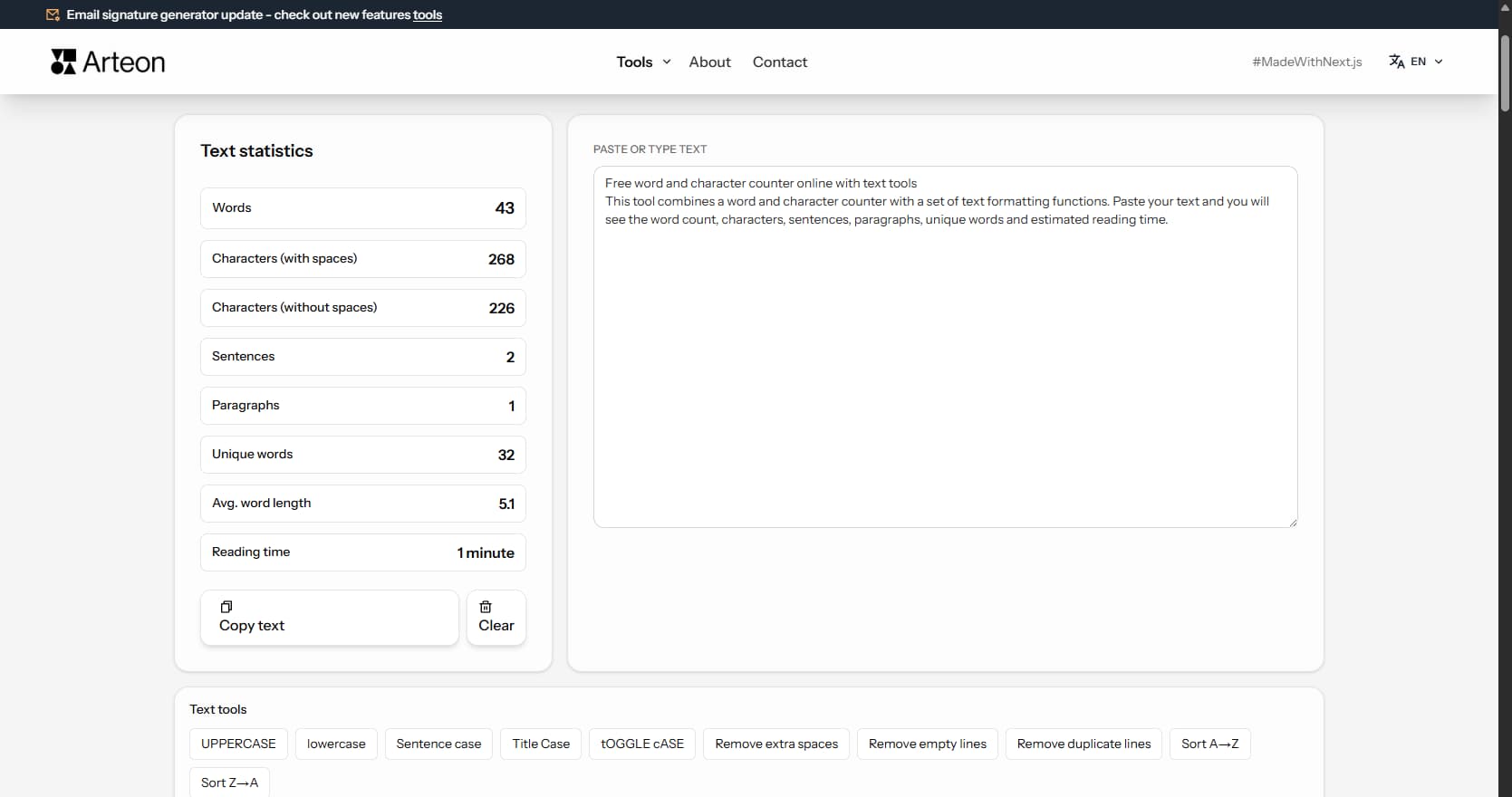
Word & character counter
Count words, characters, sentences and reading time. Check readability with the Flesch-Kincaid score.