Convert milligrams to grams
Type a value in milligrams and read the result in grams. One gram holds a thousand milligrams, so 500 mg comes out as 0.5 g. The result appears as you type, and below you will find a ready-made table of the values printed on packages and labels.
How do you convert milligrams to grams?
Divide the number of milligrams by a thousand and you get the result in grams. Five hundred milligrams works out to 0.5 grams.
You can do the same in your head. Move the decimal point three places to the left and the number is ready. That turns 250 mg into 0.25 g, and 2,000 mg into 2 g.
Formula: grams = milligrams ÷ 1,000
Three results come up more often than the rest, because those are the strengths printed on packages. A thousand milligrams is exactly one gram. Five hundred milligrams is half a gram. Two hundred and fifty milligrams is a quarter of a gram.
The same thousand works in the other direction, and there the operation is multiplication. Two grams give 2,000 mg, and the grams to milligrams converter will do the whole swap for you.
The conversion is exact down to the last digit, because a milligram is by definition one thousandth of a gram[1], and the thousand on the right side of the formula is a whole number.
For larger masses, the grams to kilograms converter gives the same weight in kilograms. If the value came in ounces, the ounces to grams converter will handle it.
What is a milligram, and what is a gram?
A milligram is one thousandth of a gram, and the name says so outright. In the SI system the prefix “milli” means exactly one thousandth, or 10⁻³[2]. The unit symbol is therefore the prefix symbol “m” joined to the gram symbol “g”.
A gram in turn is one thousandth of a kilogram. The SI base unit of mass is the kilogram[3], and since 2019 its value has come from a constant of nature: the definition fixes the numerical value of the Planck constant at 6.62607015 × 10⁻³⁴ when expressed in joule seconds. Before that the standard was a platinum-iridium cylinder kept outside Paris.
That is where the rule that orders the whole notation comes from: prefixes attach to the name “gram”, because the name of the base unit already carries the prefix “kilo”. One millionth of a kilogram is therefore called a milligram and is written 1 mg. The step from kilograms to grams is handled by the kilograms to grams converter.
Capitalization carries meaning in unit symbols. Prefix symbols for submultiples are written in lower case and those for multiples in upper case, apart from kilo, hecto and deca[2]. So “mg” means a milligram, which is 0.001 g, while “Mg” means a megagram, which is a million grams and also a metric ton. A factor of a billion separates the two symbols.
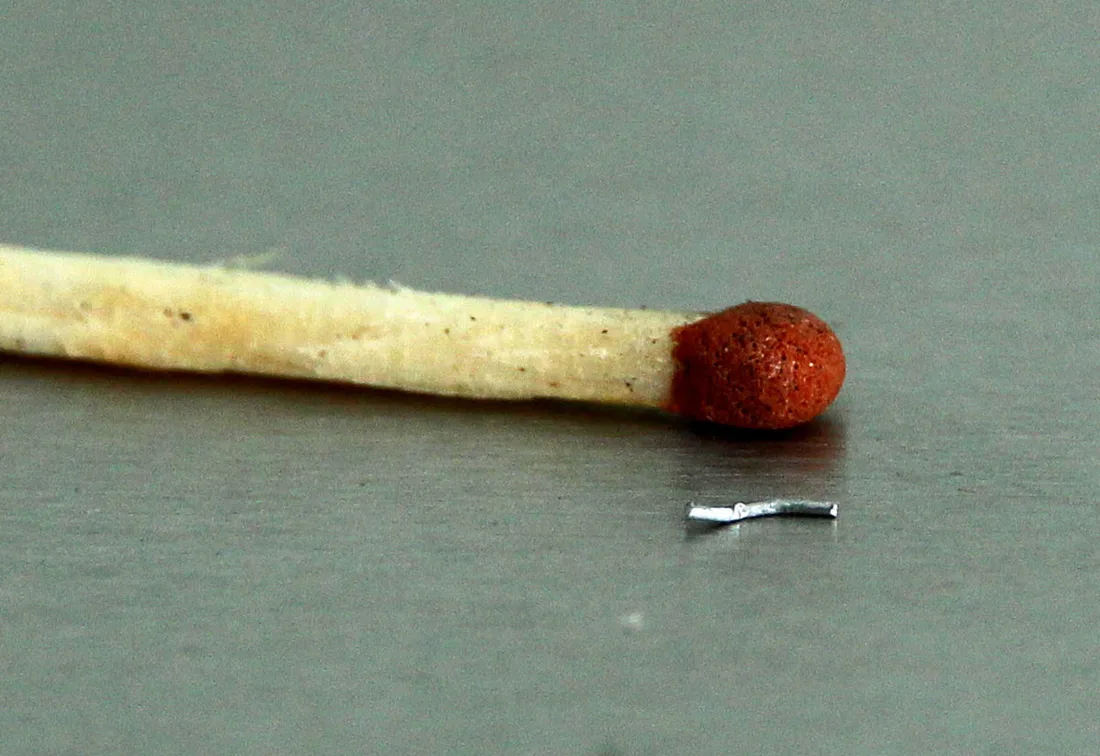
A US five-cent coin makes the gram easy to picture, because its mass is set exactly. The nickel weighs 5.000 grams[4], which is 5,000 milligrams, so a stack of ten of them is a fifty-gram weight you can carry in a pocket.
How many grams is a given number of milligrams?
| Milligrams | Grams | Micrograms |
|---|---|---|
| 1 mg | 0.001 g | 1,000 µg |
| 2 mg | 0.002 g | 2,000 µg |
| 2.5 mg | 0.0025 g | 2,500 µg |
| 3 mg | 0.003 g | 3,000 µg |
| 4 mg | 0.004 g | 4,000 µg |
| 5 mg | 0.005 g | 5,000 µg |
| 7.5 mg | 0.0075 g | 7,500 µg |
| 10 mg | 0.01 g | 10,000 µg |
| 12.5 mg | 0.0125 g | 12,500 µg |
| 15 mg | 0.015 g | 15,000 µg |
| 20 mg | 0.02 g | 20,000 µg |
| 25 mg | 0.025 g | 25,000 µg |
| 30 mg | 0.03 g | 30,000 µg |
| 40 mg | 0.04 g | 40,000 µg |
| 50 mg | 0.05 g | 50,000 µg |
| 60 mg | 0.06 g | 60,000 µg |
| 75 mg | 0.075 g | 75,000 µg |
| 80 mg | 0.08 g | 80,000 µg |
| 100 mg | 0.1 g | 100,000 µg |
| 120 mg | 0.12 g | 120,000 µg |
| 125 mg | 0.125 g | 125,000 µg |
| 150 mg | 0.15 g | 150,000 µg |
| 175 mg | 0.175 g | 175,000 µg |
| 200 mg | 0.2 g | 200,000 µg |
| 250 mg | 0.25 g | 250,000 µg |
| 300 mg | 0.3 g | 300,000 µg |
| 325 mg | 0.325 g | 325,000 µg |
| 350 mg | 0.35 g | 350,000 µg |
| 375 mg | 0.375 g | 375,000 µg |
| 400 mg | 0.4 g | 400,000 µg |
| 450 mg | 0.45 g | 450,000 µg |
| 500 mg | 0.5 g | 500,000 µg |
| 550 mg | 0.55 g | 550,000 µg |
| 600 mg | 0.6 g | 600,000 µg |
| 650 mg | 0.65 g | 650,000 µg |
| 700 mg | 0.7 g | 700,000 µg |
| 750 mg | 0.75 g | 750,000 µg |
| 800 mg | 0.8 g | 800,000 µg |
| 850 mg | 0.85 g | 850,000 µg |
| 900 mg | 0.9 g | 900,000 µg |
| 950 mg | 0.95 g | 950,000 µg |
| 1,000 mg | 1 g | 1,000,000 µg |
| 1,100 mg | 1.1 g | 1,100,000 µg |
| 1,200 mg | 1.2 g | 1,200,000 µg |
| 1,250 mg | 1.25 g | 1,250,000 µg |
| 1,500 mg | 1.5 g | 1,500,000 µg |
| 1,600 mg | 1.6 g | 1,600,000 µg |
| 1,750 mg | 1.75 g | 1,750,000 µg |
| 2,000 mg | 2 g | 2,000,000 µg |
| 2,500 mg | 2.5 g | 2,500,000 µg |
| 3,000 mg | 3 g | 3,000,000 µg |
| 3,500 mg | 3.5 g | 3,500,000 µg |
| 4,000 mg | 4 g | 4,000,000 µg |
| 4,500 mg | 4.5 g | 4,500,000 µg |
| 5,000 mg | 5 g | 5,000,000 µg |
| 6,000 mg | 6 g | 6,000,000 µg |
| 7,500 mg | 7.5 g | 7,500,000 µg |
| 8,000 mg | 8 g | 8,000,000 µg |
| 10,000 mg | 10 g | 10,000,000 µg |
The microgram symbol is µg, but American labels spell it mcg, because the Greek letter µ is not always available in print and in data systems. Both spellings mean the same unit, one millionth of a gram. The FDA units key on the Nutrition Facts label lists g, mg and mcg side by side[6].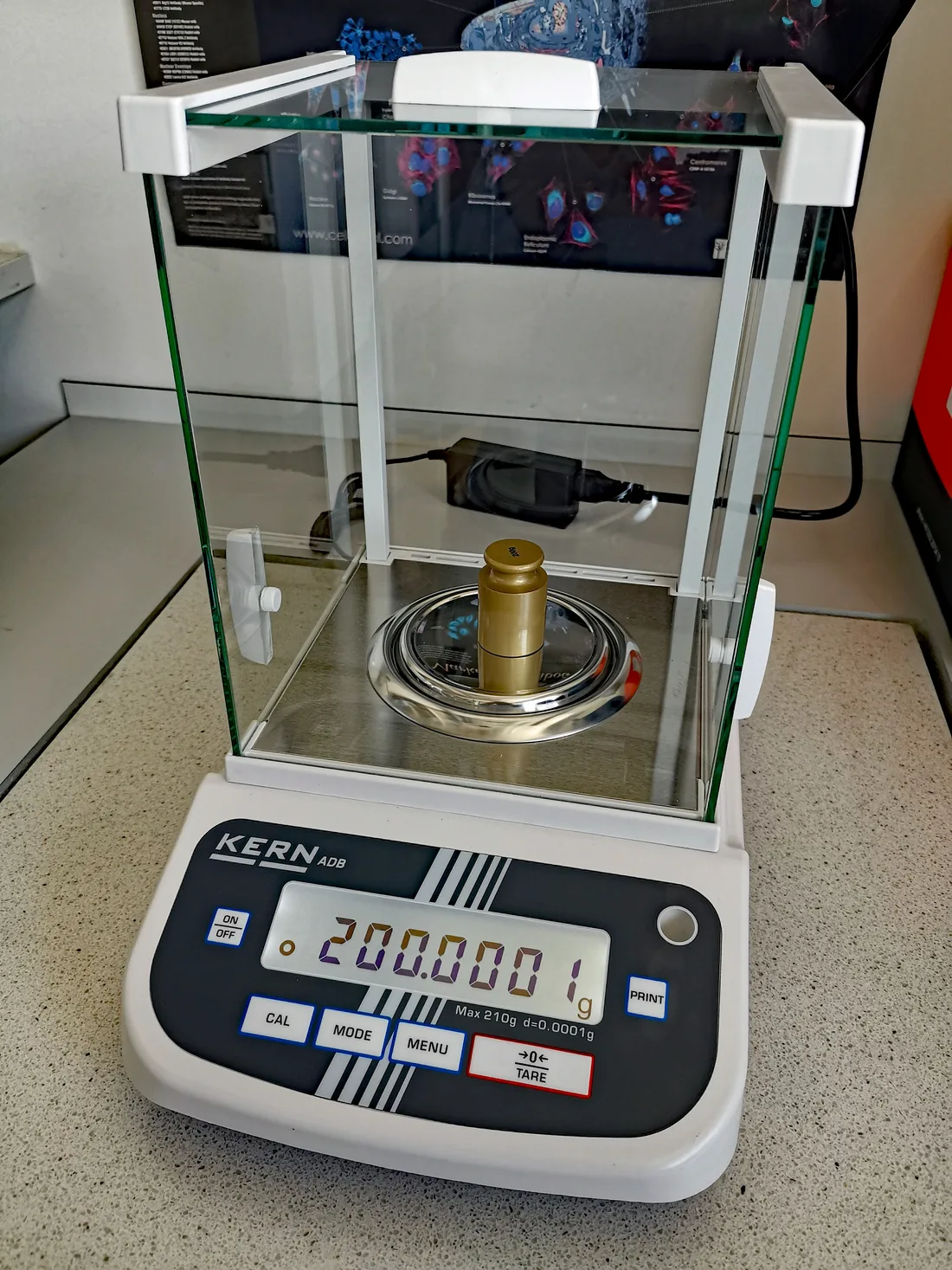
What do the milligrams on a Nutrition Facts label mean in grams?
| Nutrient | Daily Value | The same in grams |
|---|---|---|
| Potassium | 4,700 mg | 4.7 g |
| Chloride | 2,300 mg | 2.3 g |
| Sodium | 2,300 mg | 2.3 g |
| Calcium | 1,300 mg | 1.3 g |
| Phosphorus | 1,250 mg | 1.25 g |
| Choline | 550 mg | 0.55 g |
| Magnesium | 420 mg | 0.42 g |
| Cholesterol | 300 mg | 0.3 g |
| Vitamin C | 90 mg | 0.09 g |
| Iron | 18 mg | 0.018 g |
| Niacin | 16 mg | 0.016 g |
| Vitamin E | 15 mg | 0.015 g |
| Zinc | 11 mg | 0.011 g |
| Pantothenic acid | 5 mg | 0.005 g |
| Manganese | 2.3 mg | 0.0023 g |
| Vitamin B6 | 1.7 mg | 0.0017 g |
| Riboflavin | 1.3 mg | 0.0013 g |
| Thiamin | 1.2 mg | 0.0012 g |
| Copper | 0.9 mg | 0.0009 g |
Ten more nutrients from the same guide are given in micrograms: vitamin A (900 mcg RAE), vitamin D (20 mcg), vitamin K (120 mcg), folate (400 mcg DFE), vitamin B12 (2.4 mcg), biotin (30 mcg), selenium (55 mcg), chromium (35 mcg), molybdenum (45 mcg) and iodine (150 mcg)[6]. In grams each of those would start with a decimal point and several zeros, which is why the label leaves them in micrograms. A British label answers the same question with a different set of numbers, because the United Kingdom kept the European reference intakes and states salt in grams rather than sodium in milligrams.
How many servings of so many milligrams make up one gram?
| Serving strength | Grams | Servings that make one gram |
|---|---|---|
| 1 mg | 0.001 g | 1,000 |
| 2 mg | 0.002 g | 500 |
| 4 mg | 0.004 g | 250 |
| 5 mg | 0.005 g | 200 |
| 8 mg | 0.008 g | 125 |
| 10 mg | 0.01 g | 100 |
| 20 mg | 0.02 g | 50 |
| 25 mg | 0.025 g | 40 |
| 40 mg | 0.04 g | 25 |
| 50 mg | 0.05 g | 20 |
| 100 mg | 0.1 g | 10 |
| 125 mg | 0.125 g | 8 |
| 200 mg | 0.2 g | 5 |
| 250 mg | 0.25 g | 4 |
| 500 mg | 0.5 g | 2 |
| 1,000 mg | 1 g | 1 |
For strengths outside this list the arithmetic is the same, only the answer has a fractional part. A thousand divided by 750 gives 1.33, so one gram is one 750 mg serving plus a third of the next.
How do you convert milligrams to grams in a spreadsheet?
One operation is enough in a spreadsheet. If cell A1 holds a number of milligrams, type =A1/1000 in the cell next to it and you get grams.
Excel and Google Sheets also have a ready function that knows unit names. It is called CONVERT, and its syntax is CONVERT(number, from_unit, to_unit)[7]. The gram carries the code “g” and the milli prefix the code “m”, so the whole conversion reads =CONVERT(A1,"mg","g").
The same function accepts every metric prefix, so =CONVERT(A1,"mg","kg") gives the same mass straight in kilograms, and =CONVERT(A1,"g","mg") runs the other way.
Results can get long, because dividing by a thousand adds three decimal places. ROUND sets how many you keep. Writing =ROUND(A1/1000,3) leaves three digits after the point, which is exactly enough for one milligram to stay visible as 0.001 g.
Sources
- Gram — Wikipedia
- Metric (SI) Prefixes — National Institute of Standards and Technology
- Kilogram — Wikipedia
- Nickel (United States coin) — Wikipedia
- Caffeine — European Food Safety Authority (EFSA)
- Daily Value and Percent Daily Value on the Nutrition and Supplement Facts Labels — U.S. Food and Drug Administration
- CONVERT function — Microsoft
Every figure in the tables was computed from the unit definitions and checked arithmetically before publication. Historical values and the names of local units come from the sources listed above.
Content last reviewed: · written and checked by the Arteon team
Common questions about converting milligrams to grams
Is 1000 mg equal to 1 gram?
Yes, a thousand milligrams is exactly one gram. The prefix “milli” means one thousandth, so the relation holds both ways and at every scale: 2,000 mg is 2 g, and 500 mg is 0.5 g.
How many grams is 500 mg?
0.5 grams, or half a gram. You divide 500 by 1,000, which in decimal notation comes down to moving the point three places to the left.
Which is bigger, a milligram or a gram?
The gram, by a factor of a thousand. One gram is made up of a thousand one-milligram portions, so a gram is a thousand times heavier.
How many 500 mg servings are in a gram?
Two. A thousand milligrams divided by 500 gives 2. With 250 mg servings you get four, with 200 mg five, and with 100 mg ten.
What is the difference between a milligram and a microgram?
A factor of a thousand. A milligram is one thousandth of a gram and a microgram one millionth, so 1 mg is 1,000 µg. American labels write the microgram as mcg, which means the same unit as µg.
Is 200 mg the same as 0.2 mL?
Those are two different physical quantities. A milligram measures mass and a millilitre volume, so moving between them needs the density of the substance. One millilitre of water has a mass of about one gram, so for water alone 200 mg comes to roughly 0.2 mL. Every other substance has its own density and gives a different volume for the same mass.
Why are mg and Mg two different units?
Because capitalization carries meaning in unit symbols. The lower-case “m” stands for the prefix milli, one thousandth, and the upper-case “M” for mega, a million. So “mg” means 0.001 grams and “Mg” means a million grams, that is a metric ton.
Help us improve these tools
Have an idea for a feature, found a bug or want to suggest another tool? Write to us — we reply within 24 hours.