Convert litres to millilitres
Enter a value in litres and read the result in millilitres. One litre holds 1,000 millilitres, so 0.75 l comes to 750 ml. Below you will find 51 ready conversions, sizes from a can to a water meter and a formula for your spreadsheet.
How many ml are in 1 litre?
One litre holds 1,000 millilitres. Half a litre is 500 millilitres, and 0.75 litres comes to 750 millilitres.
The relationship follows from the name of the unit: the prefix milli- means one thousandth, so a thousand millilitres fit inside a litre.
How do you convert litres to ml? Formula and example
Multiply the number of litres by a thousand and you have the answer in millilitres.
The formula: millilitres = litres × 1000. The other way round: litres = millilitres ÷ 1000.
Three figures come out of this sum more often than any others. A bottle marked 0.7 litres holds 700 millilitres. A bottle of wine marked 0.75 litres holds 750 millilitres. A large water bottle of 1.5 litres works out at 1,500 millilitres.
On paper, multiplying by a thousand means moving the decimal point three places to the right. Two and a half litres become 2,500 millilitres, and 0.05 litres comes to 50 millilitres. Fill any gaps left by the shift with zeros.
If your figure is already written in millilitres, the millilitres to litres converter does the same sum the other way.
What is a litre and what is a millilitre?
A litre is a unit of volume and matches one cubic decimetre exactly, a cube ten centimetres along each side[1]. That is the size of a one-litre carton and of a large measuring jug.
A millilitre is one thousandth of a litre and equals one cubic centimetre. Manufacturers give the capacity of cosmetics, medicines and drinks in this unit, which is why small labels carry millilitres rather than litres.
How many millilitres is a given number of litres?
| Litres | Millilitres |
|---|---|
| 0.05 l | 50 ml |
| 0.1 l | 100 ml |
| 0.15 l | 150 ml |
| 0.2 l | 200 ml |
| 0.25 l | 250 ml |
| 0.3 l | 300 ml |
| 0.33 l | 330 ml |
| 0.35 l | 350 ml |
| 0.4 l | 400 ml |
| 0.5 l | 500 ml |
| 0.6 l | 600 ml |
| 0.7 l | 700 ml |
| 0.75 l | 750 ml |
| 0.8 l | 800 ml |
| 0.9 l | 900 ml |
| 1 l | 1,000 ml |
| 1.1 l | 1,100 ml |
| 1.14 l | 1,140 ml |
| 1.2 l | 1,200 ml |
| 1.25 l | 1,250 ml |
| 1.3 l | 1,300 ml |
| 1.4 l | 1,400 ml |
| 1.5 l | 1,500 ml |
| 1.7 l | 1,700 ml |
| 1.75 l | 1,750 ml |
| 1.8 l | 1,800 ml |
| 1.9 l | 1,900 ml |
| 2 l | 2,000 ml |
| 2.2 l | 2,200 ml |
| 2.5 l | 2,500 ml |
| 2.7 l | 2,700 ml |
| 3 l | 3,000 ml |
| 3.5 l | 3,500 ml |
| 3.7 l | 3,700 ml |
| 3.785 l | 3,785 ml |
| 4 l | 4,000 ml |
| 4.5 l | 4,500 ml |
| 5 l | 5,000 ml |
| 6 l | 6,000 ml |
| 7 l | 7,000 ml |
| 8 l | 8,000 ml |
| 9 l | 9,000 ml |
| 10 l | 10,000 ml |
| 12 l | 12,000 ml |
| 15 l | 15,000 ml |
| 20 l | 20,000 ml |
| 25 l | 25,000 ml |
| 50 l | 50,000 ml |
| 75 l | 75,000 ml |
| 100 l | 100,000 ml |
| 1,000 l | 1,000,000 ml |
The 3.785 litre row is a US gallon, and 4.546 litres would be an imperial one. Both are handled by the gallons to litres converter.
How many ml is a 5 litre jerrycan or a 50 litre tank?
| Capacity | Millilitres | Where you meet it |
|---|---|---|
| 0.33 l | 330 ml | European drinks can |
| 0.5 l | 500 ml | Water bottle |
| 1.5 l | 1,500 ml | Large water bottle |
| 2 l | 2,000 ml | Bottle of soda |
| 3.785 l | 3,785 ml | One US gallon |
| 4.546 l | 4,546 ml | One imperial gallon |
| 5 l | 5,000 ml | Jerrycan |
| 20 l | 20,000 ml | Water cooler bottle |
| 50 l | 50,000 ml | Fuel tank of a small car |
| 1,000 l | 1,000,000 ml | One cubic metre on a water meter |
The last row is a full cubic metre, the unit water and sewage are billed in. One cubic metre on an invoice stands for a thousand litres, which is a million millilitres.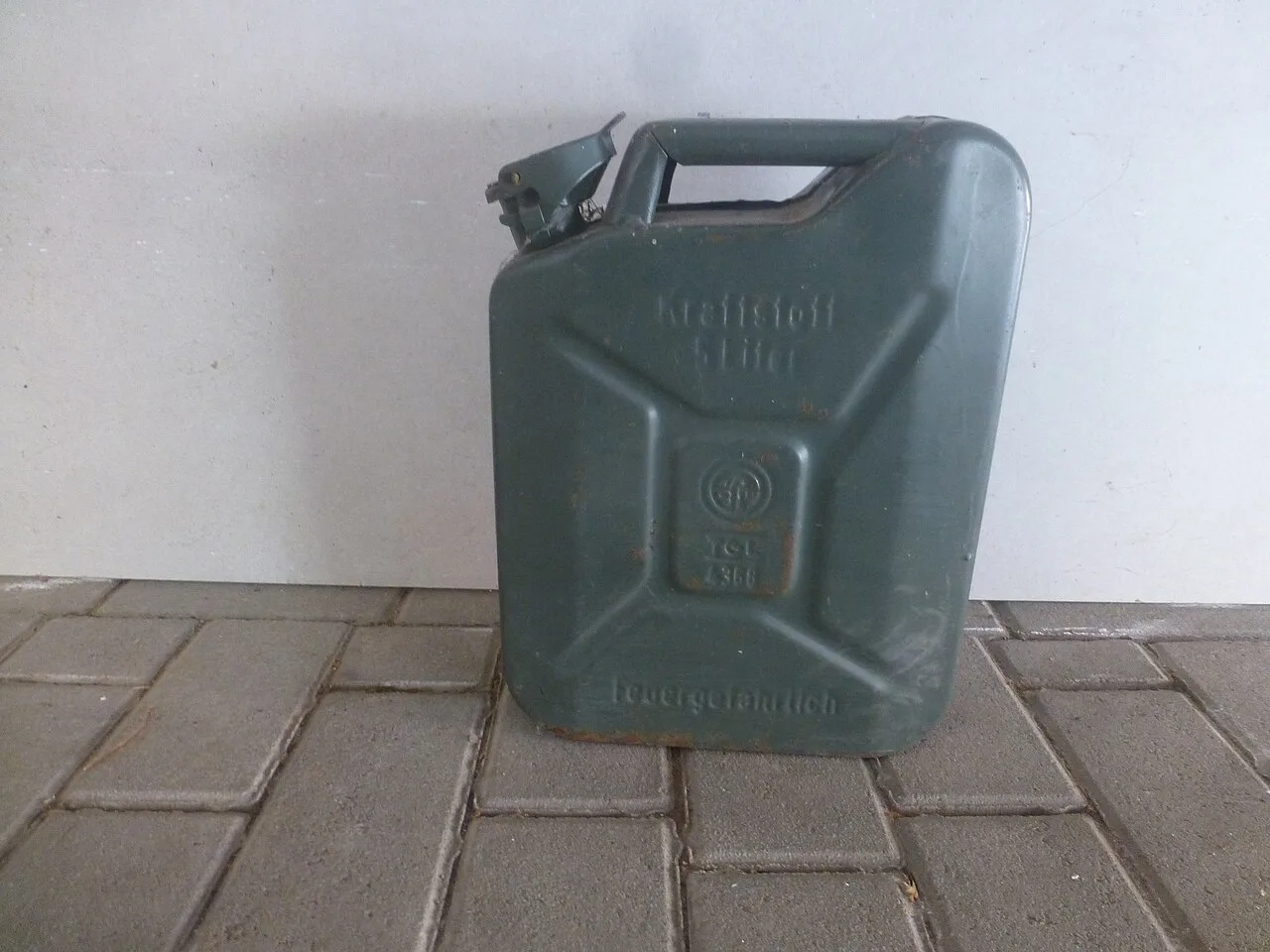
How many cups is half a litre, and how many is a litre?
| Recipe volume | Millilitres | In US cups |
|---|---|---|
| 0.125 l | 125 ml | half a cup |
| 0.25 l | 250 ml | roughly one cup |
| 0.5 l | 500 ml | about two cups |
| 0.75 l | 750 ml | a little over three cups |
| 1 l | 1,000 ml | about four and a quarter cups |
| 1.5 l | 1,500 ml | about six and a third cups |
| 2 l | 2,000 ml | about eight and a half cups |
A full litre comes to a little over four US cups, because the cup is 236.6 millilitres rather than a round 250. A metric cup, used in Australia and New Zealand, holds exactly 250 millilitres, and a litre is then four of them.
How do you convert litres to ml in a spreadsheet?
Put the number of litres in cell A1 and enter =A1*1000 in the cell next to it. Excel, Google Sheets and LibreOffice Calc all handle it the same way, and copying that cell down converts the whole column.
Excel also has a function of its own. The entry =CONVERT(A1,"l","ml") turns litres into millilitres, because the unit code for the litre is "l" and the prefix "m" makes it a millilitre[2].
For larger figures, switch on the thousands separator so that a million millilitres shows as 1,000,000.
How many litres are in a hectolitre and in a cubic metre?
Above the litre each step is again ten times the one before. A decalitre is ten litres and a hectolitre is a hundred.
The hectolitre is the unit breweries and wineries report in, so production figures are quoted in it. A hundred litres is a hundred thousand millilitres, or two hundred half-litre bottles.
The cubic metre sits higher still and holds a thousand litres[1]. Water and gas meters count in this unit, which is why a utility bill talks about cubic metres while a bottle in the shop talks about litres. Both units describe the same physical quantity.
Sources
- Litre — Wikipedia
- CONVERT function — Microsoft
Every figure in the tables was computed from the unit definitions and checked arithmetically before publication. Historical values and the names of local units come from the sources listed above.
Content last reviewed: · written and checked by the Arteon team
Frequently asked questions about converting litres to ml
Is 1.75 litres more than two 0.75 litre bottles?
Yes. Two bottles of 0.75 litres come to 1.5 litres, which is 1,500 millilitres. A 1.75 litre bottle holds 1,750 millilitres, so it is 250 millilitres larger.
What does dm³ mean on a package?
Cubic decimetre, which is exactly the same as a litre. One dm³ is 1,000 millilitres, so a container marked 5 dm³ holds five litres. The notation turns up on technical products and building chemicals, where volume is given in cubic units.
Why is engine capacity given in litres?
Because it is the combined volume of the cylinders, and that comes out in cubic centimetres, which are the same as millilitres. An engine described as 1.6 litres has 1,600 cubic centimetres, or 1,600 millilitres. Motorcycles keep the cubic notation: 125 cc is 0.125 litres.
How many litres is a US gallon?
A US gallon is 3.785 litres, which is 3,785 millilitres. An imperial gallon is 4.546 litres, or 4,546 millilitres, so the two differ by roughly three quarters of a litre. The litres to gallons converter switches between them.
Does the field accept decimals?
Yes. You can type 1.5 or 1,5, and a simple fraction such as 3/4 works too. The result appears as you type, with no separate button to press.
Help us improve these tools
Have an idea for a feature, spotted a mistake or want to suggest another tool? Write to us — we reply within 24 hours.