Convert millimetres to centimetres
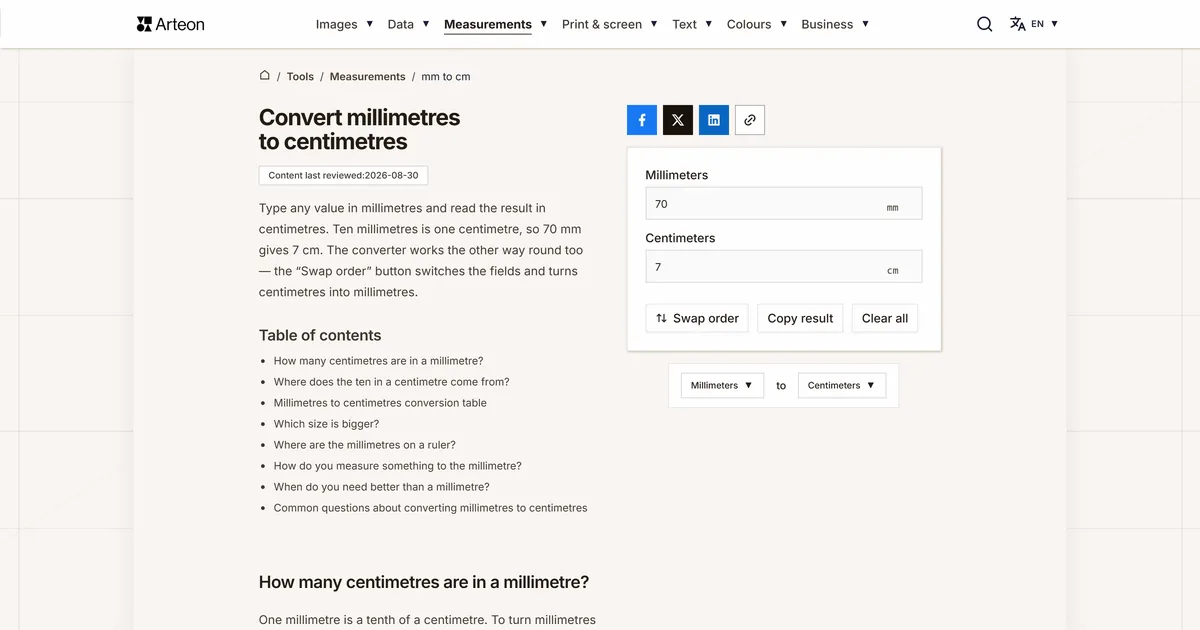
Type any value in millimetres and read the result in centimetres. Ten millimetres is one centimetre, so 70 mm gives 7 cm. The converter works the other way round too — the “Swap order” button switches the fields and turns centimetres into millimetres.
How many centimetres are in a millimetre?
One millimetre is a tenth of a centimetre. To turn millimetres into centimetres, divide by ten: 70 mm ÷ 10 = 7 cm. In decimal notation that is a shift of the point one place to the left, so 25 mm gives 2.5 cm and 6 mm gives 0.6 cm.
Formula: cm = mm ÷ 10
Where does the ten in a centimetre come from?
Both units come from the metre. The metre is the base unit of the SI system, and since 1983 it has been fixed by the speed of light in vacuum, set at exactly 299,792,458 metres per second[1][2]. The remaining units of length are built from the metre by adding a prefix.
The prefix milli- means one thousandth, so a millimetre is a thousandth of a metre. The prefix centi- means one hundredth, so a centimetre is a hundredth of a metre. A metre holds a thousand millimetres but only a hundred centimetres, which means a centimetre is ten times longer than a millimetre.
The same rule orders the whole scale. A decimetre is a tenth of a metre, a micrometre a millionth and a nanometre a billionth. Upwards it works the same way: the prefix kilo- means a thousand, so a kilometre holds a thousand metres.
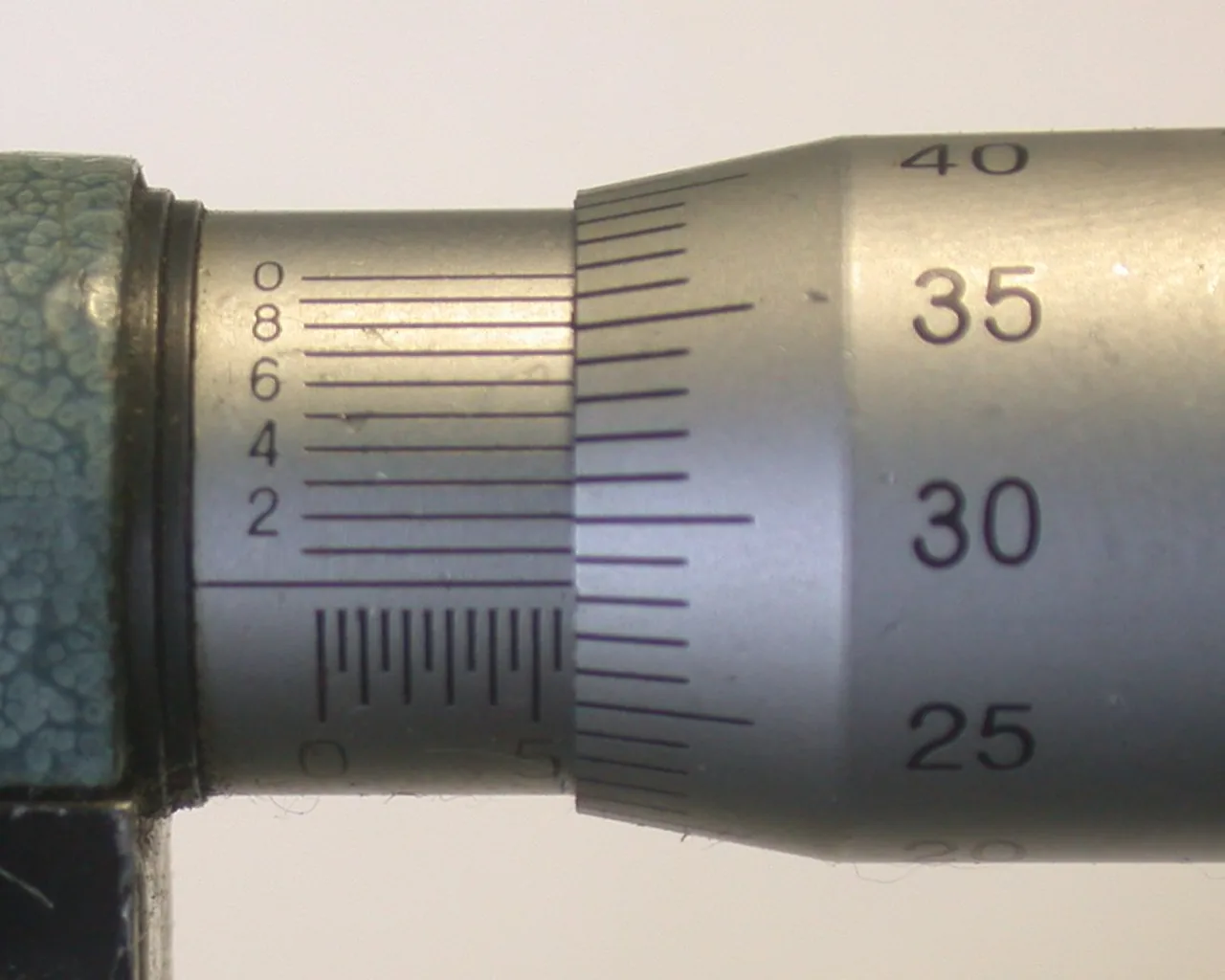
Millimetres to centimetres conversion table
| Millimetres | Centimetres |
|---|---|
| 1 mm | 0.1 cm |
| 2 mm | 0.2 cm |
| 4 mm | 0.4 cm |
| 5 mm | 0.5 cm |
| 7 mm | 0.7 cm |
| 10 mm | 1 cm |
| 12 mm | 1.2 cm |
| 15 mm | 1.5 cm |
| 20 mm | 2 cm |
| 25 mm | 2.5 cm |
| 30 mm | 3 cm |
| 40 mm | 4 cm |
| 50 mm | 5 cm |
| 60 mm | 6 cm |
| 70 mm | 7 cm |
| 80 mm | 8 cm |
| 100 mm | 10 cm |
| 150 mm | 15 cm |
| 200 mm | 20 cm |
| 250 mm | 25 cm |
| 300 mm | 30 cm |
| 500 mm | 50 cm |
| 600 mm | 60 cm |
| 1000 mm | 100 cm |
Which size is bigger?
| Comparison | Bigger | Difference |
|---|---|---|
| 5 mm and 1 cm | 1 cm | 5 mm |
| 7 mm and 1 cm | 1 cm | 3 mm |
| 9 mm and 1 cm | 1 cm | 1 mm |
| 10 mm and 1 cm | the same | 0 mm |
| 12 mm and 1 cm | 12 mm | 2 mm |
| 15 mm and 1 cm | 15 mm | 5 mm |
| 20 mm and 2 cm | the same | 0 mm |
| 25 mm and 2 cm | 25 mm | 5 mm |
Where are the millimetres on a ruler?
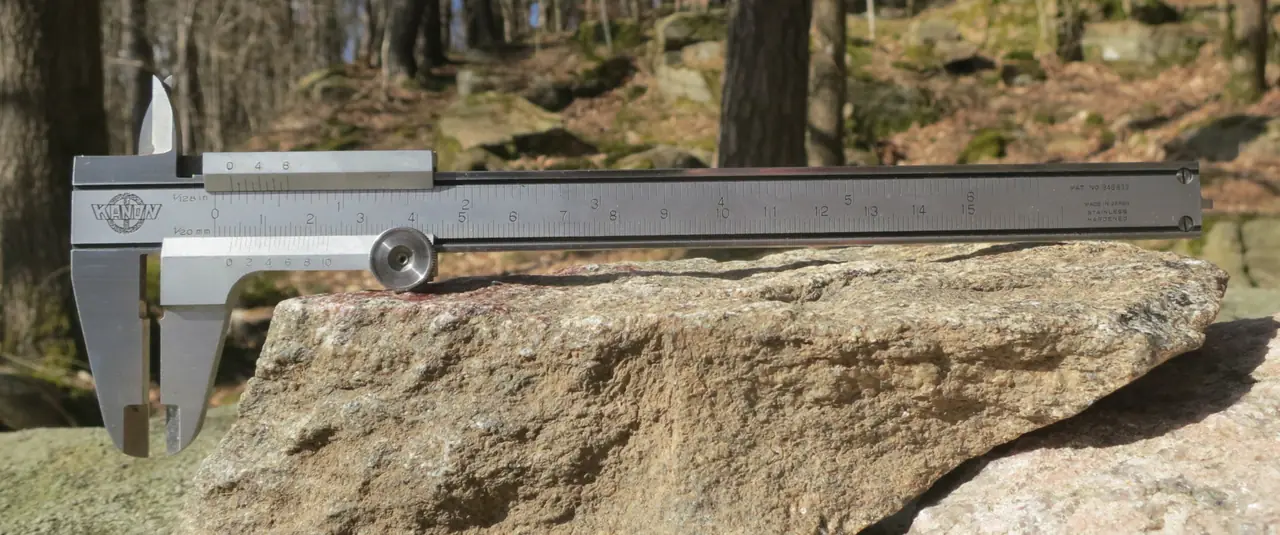
A ruler divides every centimetre into ten equal steps, and the marks come in three lengths.
| Part of the scale | What it means |
|---|---|
| Longest mark with a number | a full centimetre, which is 10 mm |
| Medium mark halfway | half a centimetre, which is 5 mm |
| Shortest mark | one millimetre |
| Steps between two numbers | ten |
Between the numbers 3 and 4 there are ten steps. The fifth carries a longer mark and lands on 3.5 cm, which is 35 mm.
How do you measure something to the millimetre?
Work through four steps and you will read the dimension to a single mark on the scale.
Line the zero up with the edge
On many rulers the zero sits a few millimetres in from the physical end, so find the right mark first and use that one.Read the last whole number
The number before the edge of the object gives you the whole centimetres.Count the short marks
Each one is a millimetre. The longer mark halfway makes counting easier, because it falls on the fifth millimetre.Put the reading together
Four marks past the number 6 give 6.4 cm, which is 64 mm.
When do you need better than a millimetre?
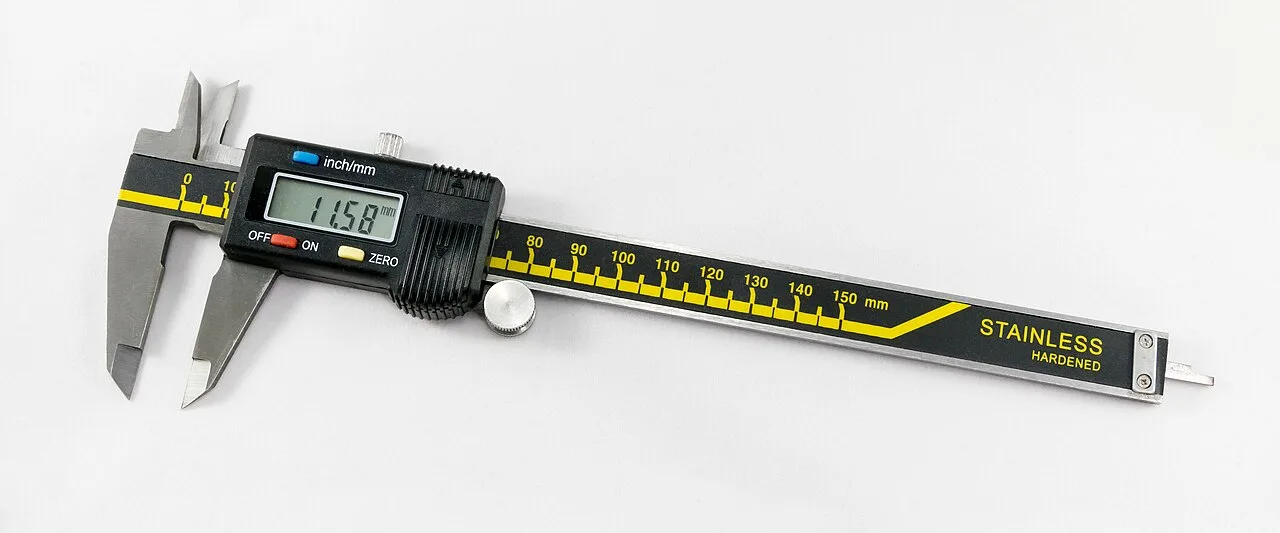
A calliper gives the result straight in millimetres, to one decimal place. A reading of 64.3 mm is 6.43 cm. That precision matters for hole diameters, material thickness and machined parts, where a tenth of a millimetre decides whether a part fits.
Sources
- SI base unit: metre — BIPM
- History of the metre — BIPM
Every figure in the tables was computed from the unit definitions and checked arithmetically before publication. Historical values and the names of local units come from the sources listed above.
Content last reviewed: · written and checked by the Arteon team
Common questions about converting millimetres to centimetres
How many centimetres is 70 mm?
Seventy millimetres is seven centimetres. Dividing by ten moves the decimal point one place to the left.
How many centimetres is 25 mm?
Twenty-five millimetres is 2.5 cm, two and a half centimetres.
Is 1 mm the same as 0.1 cm?
Yes. A millimetre is a tenth of a centimetre, so 0.1 cm describes the same length.
What does 1 mm of rainfall mean?
One millimetre of rain is a layer of water a millimetre deep spread over the whole surface. On a square metre that comes to one litre of water.
How do you convert mm to cm without a calculator?
Move the decimal point one place to the left. 340 mm becomes 34 cm, and 7 mm becomes 0.7 cm.
How many millimetres are between two numbers on a ruler?
There are ten of them. Each short mark is one millimetre, and the gap between neighbouring numbers is a full centimetre.
How many centimetres is 600 mm?
Six hundred millimetres is sixty centimetres, which is 0.6 of a metre.
Help us improve our tools
Have an idea, found a bug, or want to suggest a feature? Drop us a message – we respond within 24 hours.