Convert meters to centimeters
Enter a value in meters and read the result in centimeters. One meter is 100 cm, so 2.5 m comes out as 250 cm. The input field accepts decimals, so you can type a laser measure reading straight into it. The Swap order button opens the centimeters to meters converter.
How do you convert meters to centimeters?
Multiply the number of meters by one hundred and you have the answer in centimeters. Two and a half meters works out at 250 cm.
In your head it is quicker still, because multiplying by a hundred just moves the decimal point two places to the right. That turns 1.62 m into 162 cm, and 0.75 m into 75 cm.
Formula: centimeters = meters × 100
Most of the values people convert sit below three meters, because that is the size of rooms and of the things inside them. A reading of 0.9 m is 90 cm, the width of a standard doorway. A worktop at 1.4 m is 140 cm. A ceiling at 2.4 m is 240 cm.
Going the other way, the same hundred becomes the divisor. Three hundred centimeters gives three meters, and the centimeters to meters converter does the whole sum for you.
The answer stays exact however many decimal places the input has. A meter divides into one hundred equal centimeters, so multiplying only shifts the decimal point and introduces no rounding error at all.
When you need a finer scale, the centimeters to millimeters converter gives the same measurement in millimeters. For a figure in imperial units, the meters to feet converter takes over.
What is a meter, and what is a centimeter?
The meter is the SI base unit of length, which makes it the reference point for every other length in the metric system. Since 2019 its length has been set by the speed of light in vacuum, fixed at 299,792,458 meters per second, with the second itself defined by the caesium frequency[1].
Before that the meter rested on the Earth rather than on light. The French National Assembly set the first standard in 1791 as one ten-millionth of the distance from the equator to the North Pole along a meridian through Paris, which is where the round figure of 10,000 kilometers for that quarter of the globe comes from[1].
A centimeter is a subdivision of the meter rather than a unit in its own right. The prefix centi- means one hundredth, so the hundred in the formula comes straight out of the name[2]. That is why this conversion comes down to moving a decimal point.
How many centimeters is a given number of meters?
| Meters | Centimeters | Millimeters |
|---|---|---|
| 0.01 m | 1 cm | 10 mm |
| 0.05 m | 5 cm | 50 mm |
| 0.1 m | 10 cm | 100 mm |
| 0.25 m | 25 cm | 250 mm |
| 0.5 m | 50 cm | 500 mm |
| 0.75 m | 75 cm | 750 mm |
| 1 m | 100 cm | 1,000 mm |
| 1.2 m | 120 cm | 1,200 mm |
| 1.25 m | 125 cm | 1,250 mm |
| 1.5 m | 150 cm | 1,500 mm |
| 1.6 m | 160 cm | 1,600 mm |
| 1.62 m | 162 cm | 1,620 mm |
| 1.65 m | 165 cm | 1,650 mm |
| 1.7 m | 170 cm | 1,700 mm |
| 1.75 m | 175 cm | 1,750 mm |
| 1.8 m | 180 cm | 1,800 mm |
| 1.9 m | 190 cm | 1,900 mm |
| 2 m | 200 cm | 2,000 mm |
| 2.2 m | 220 cm | 2,200 mm |
| 2.5 m | 250 cm | 2,500 mm |
| 2.7 m | 270 cm | 2,700 mm |
| 3 m | 300 cm | 3,000 mm |
| 3.5 m | 350 cm | 3,500 mm |
| 4 m | 400 cm | 4,000 mm |
| 4.5 m | 450 cm | 4,500 mm |
| 5 m | 500 cm | 5,000 mm |
| 5.5 m | 550 cm | 5,500 mm |
| 6 m | 600 cm | 6,000 mm |
| 7 m | 700 cm | 7,000 mm |
| 7.5 m | 750 cm | 7,500 mm |
| 8 m | 800 cm | 8,000 mm |
| 9 m | 900 cm | 9,000 mm |
| 10 m | 1,000 cm | 10,000 mm |
| 12 m | 1,200 cm | 12,000 mm |
| 15 m | 1,500 cm | 15,000 mm |
| 20 m | 2,000 cm | 20,000 mm |
| 25 m | 2,500 cm | 25,000 mm |
| 30 m | 3,000 cm | 30,000 mm |
| 40 m | 4,000 cm | 40,000 mm |
| 50 m | 5,000 cm | 50,000 mm |
| 60 m | 6,000 cm | 60,000 mm |
| 75 m | 7,500 cm | 75,000 mm |
| 80 m | 8,000 cm | 80,000 mm |
| 100 m | 10,000 cm | 100,000 mm |
| 150 m | 15,000 cm | 150,000 mm |
| 200 m | 20,000 cm | 200,000 mm |
| 250 m | 25,000 cm | 250,000 mm |
| 300 m | 30,000 cm | 300,000 mm |
| 500 m | 50,000 cm | 500,000 mm |
| 1,000 m | 100,000 cm | 1,000,000 mm |
The highlighted row is the reference point for the whole table: one meter holds a hundred centimeters and a thousand millimeters. The rows from 1.5 to 2 m cover the range adult height falls into, so 1.65 m written in centimeters is 165 cm.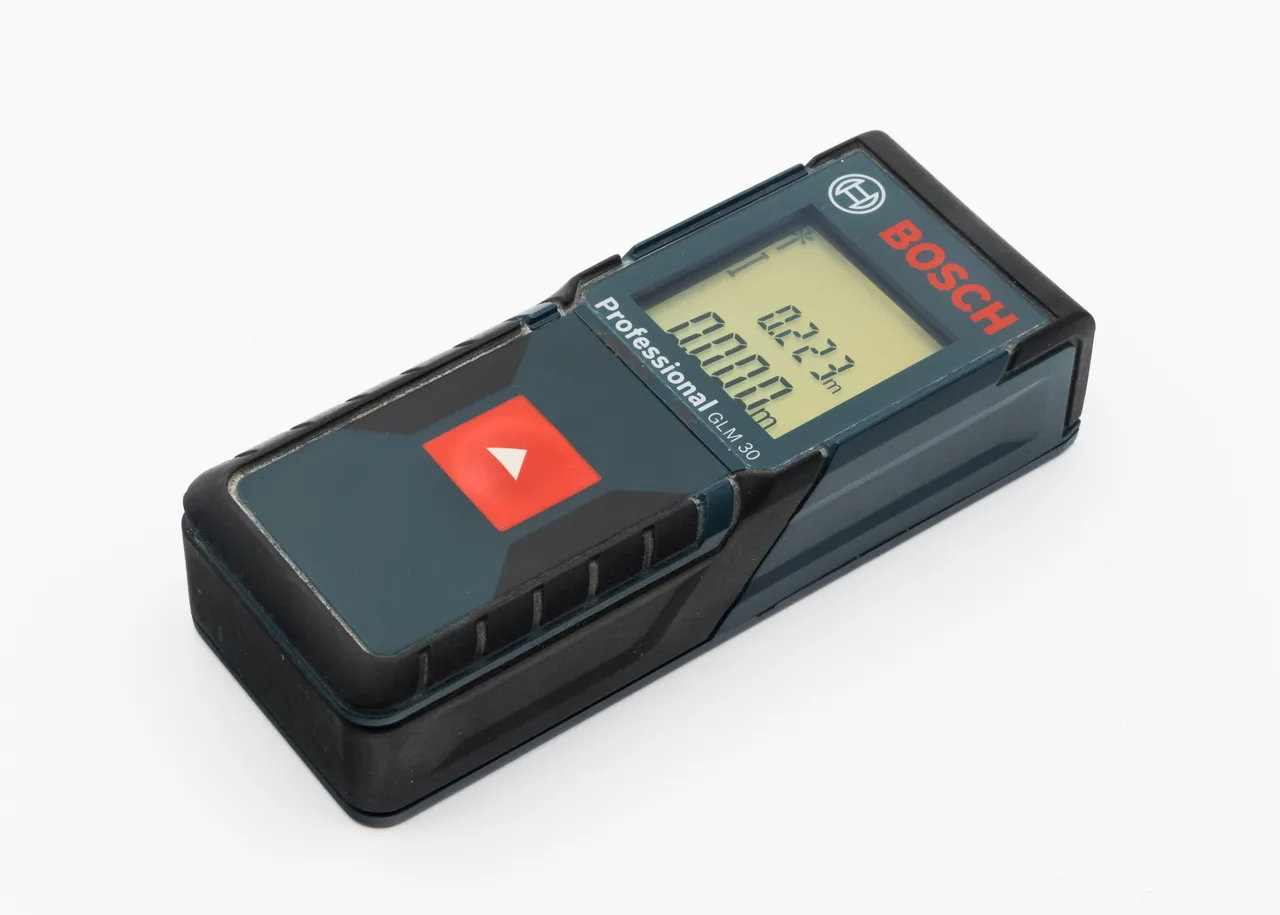
How many centimeters are in a kilometer, a decimeter and a millimeter?
| Unit | Meters | Centimeters | Where you meet it |
|---|---|---|---|
| Kilometer (km) | 1000 m | 100,000 cm | Distances between towns and the length of a route |
| Meter (m) | 1 m | 100 cm | Room sizes, a person's height, materials sold by the meter |
| Decimeter (dm) | 0.1 m | 10 cm | Volume given in cubic decimeters, since one of those is one liter |
| Centimeter (cm) | 0.01 m | 1 cm | The size of objects and the scale printed on a tape measure |
| Millimeter (mm) | 0.001 m | 0.1 cm | Material thickness and dimensions on a technical drawing |
| Micrometer (µm) | 0.000001 m | 0.0001 cm | Coating thickness and fiber diameter |
The decimeter has dropped out of everyday speech, but its cube has not: one cubic decimeter is exactly one liter, so a 1.5-liter bottle holds 1.5 dm³. The centimeter survives in both systems — a subdivision of the meter in SI, and the base unit of length in the old CGS system[2]. The largest of these units has a converter of its own: meters to kilometers.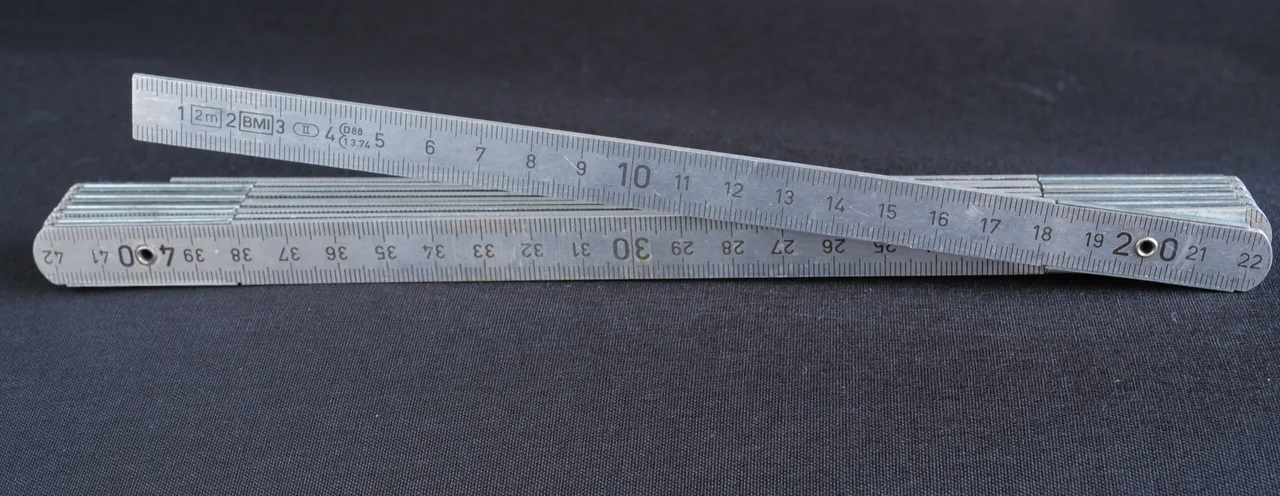
How many centimeters are A4, A0 and B0?
| Size | Meters | Centimeters | Millimeters |
|---|---|---|---|
| B0 | 1 × 1.414 m | 100 × 141.4 cm | 1000 × 1414 mm |
| A0 | 0.841 × 1.189 m | 84.1 × 118.9 cm | 841 × 1189 mm |
| B1 | 0.707 × 1 m | 70.7 × 100 cm | 707 × 1000 mm |
| A1 | 0.594 × 0.841 m | 59.4 × 84.1 cm | 594 × 841 mm |
| A2 | 0.42 × 0.594 m | 42 × 59.4 cm | 420 × 594 mm |
| A3 | 0.297 × 0.42 m | 29.7 × 42 cm | 297 × 420 mm |
| A4 | 0.21 × 0.297 m | 21 × 29.7 cm | 210 × 297 mm |
| A5 | 0.148 × 0.21 m | 14.8 × 21 cm | 148 × 210 mm |
The B series sits between the A sizes: each B format is the geometric mean of two neighboring A formats, which is how B0 ends up with a side of exactly 1000 mm[3]. The United States and Canada are the main countries outside this system and use North American paper sizes instead, which is worth knowing when a print file crosses the Atlantic[3].
How do you convert a whole column of meters in a spreadsheet?
Put the number of meters in cell A1 and enter =A1*100 in the cell next to it. Excel, Google Sheets and LibreOffice Calc all handle it the same way. To convert a whole list of dimensions, grab the bottom right corner of the cell holding the result and drag it down — the formula copies into every row.
When one file mixes several units, the unit function is the easier route: =CONVERT(A1,"m","cm"). The source and target units go in quotation marks, so reversing the direction is a matter of swapping two arguments[4].
If you want the cell to read "250 cm" while the value stays a number, apply the custom format 0" cm". The spreadsheet then prints the unit alongside the figure and every calculation still works on it.
Sources
- Metre — Wikipedia
- Centimetre — Wikipedia
- ISO 216 — Wikipedia
- CONVERT function — Microsoft
Every figure in the tables was computed from the unit definitions and checked arithmetically before publication. Historical values and the names of local units come from the sources listed above.
Content last reviewed: · written and checked by the Arteon team
Common questions about converting meters to centimeters
How many centimeters are in half a meter and a quarter of a meter?
Half a meter is 50 cm and a quarter of a meter is 25 cm. Both come out of the same multiplication: 0.5 times a hundred, and 0.25 times a hundred. Three quarters of a meter therefore gives 75 cm.
How do you write a height given in meters?
A height of 1.62 m is 162 cm, and 1.8 m is 180 cm. The two forms describe the same person and differ only in the unit. Medical and sporting records tend to use centimeters, because that way the figure needs no decimal point.
What does a reading like 1 m 25 cm mean, and how do you convert it?
It is a mixed reading, with whole meters written next to the remainder in centimeters. To get a single figure, multiply the meters by a hundred and add the centimeters: 1 times 100 plus 25 gives 125 cm. In meters the same length is 1.25 m.
How do you convert an area given in square meters?
Area squares the conversion factor, so one square meter is 10,000 cm². A room measuring 4 by 5 meters covers 20 m², which comes to 200,000 cm². The side of that room converts the ordinary way: 4 m is 400 cm.
Why does a laser measure show three decimal places?
The third decimal place is millimeters, the finest step such a device reports. A reading of 2.347 m therefore means 234.7 cm. Broken into parts it is 2 meters, 34 centimeters and 7 millimeters. When ordering materials, a figure like that is usually rounded to whole centimeters.
Does one meter mean the same thing in every country?
Yes. The meter has a single definition that holds worldwide, and national measurement institutes maintain it. What differs between countries is the unit people reach for day to day: the United States gives sizes in feet and inches, although those units are themselves defined in terms of the meter.
How many inches and feet are in a meter?
One hundred centimeters is 39.37 inches. In feet the same length comes to 3.28 feet. Both figures follow from the definition of the inch as exactly 2.54 cm, since twelve of those inches make a foot of 30.48 cm. The meters to feet converter handles the full conversion.
Help us improve our tools
Got an idea for a new feature, found a bug or want to suggest another tool? Write to us — we reply within 24 hours.